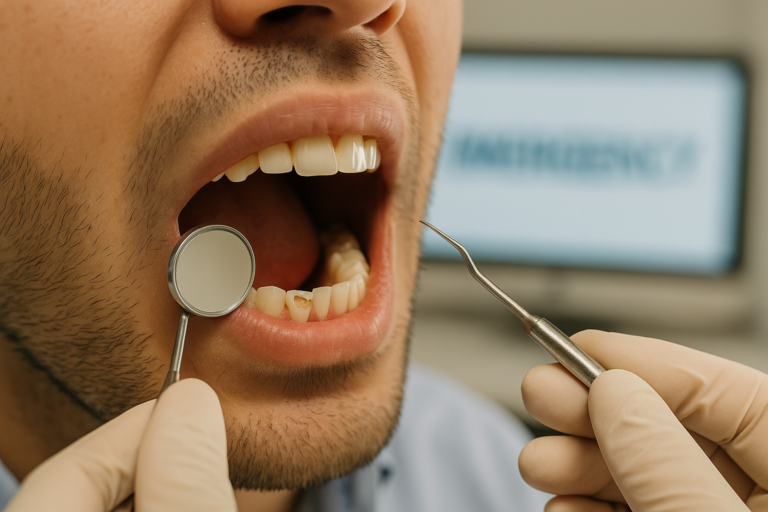

Wisdom tooth pain can range from a mild annoyance to intense, throbbing discomfort that makes it hard to eat, sleep, or focus. For many people, the biggest question is not just why it hurts, but whether the problem can wait a few days or if they need urgent dental care right away.
That uncertainty is understandable. Wisdom teeth often cause pressure, gum irritation, and soreness as they emerge. In some cases, symptoms settle temporarily. In others, pain is a warning sign of infection, damage to nearby teeth, or a problem that can worsen quickly if treatment is delayed.
This article explains the difference between common wisdom tooth discomfort and signs that may require prompt evaluation. It is intended for general education only and cannot diagnose the cause of your symptoms. If your pain is severe, worsening, or accompanied by swelling, fever, difficulty swallowing, or trouble breathing, seek immediate professional care.
Why wisdom teeth can be painful
Wisdom teeth are the last molars to develop, usually appearing in the late teens or twenties. Some come in normally and never cause major problems. Others only partially erupt, grow at an angle, remain trapped under the gums, or crowd nearby teeth.
Pain may happen for several reasons, including:
- Pressure from eruption: The tooth is pushing through the gum tissue.
- Inflamed gum tissue: The gum around a partially erupted wisdom tooth can become irritated.
- Food and bacteria trapped around the tooth: This can lead to infection or decay.
- Impaction: The tooth may be stuck under the gums or against another tooth.
- Damage to a nearby molar: A wisdom tooth pressing against a second molar can contribute to pain and long-term problems.
- Cavity or gum infection: Pain may not be from eruption alone.
Because several issues can produce similar symptoms, it is not always possible to tell at home whether the pain is temporary irritation or something more urgent.
When wisdom tooth pain can sometimes wait
Not every episode of wisdom tooth discomfort is an emergency. Mild symptoms may be appropriate for routine dental evaluation if they are short-lived, manageable, and not getting worse.
Examples of wisdom tooth pain that may be able to wait briefly include:
- Mild soreness at the back of the jaw
- Temporary gum tenderness where a tooth seems to be coming in
- Occasional discomfort when chewing that improves
- Minor irritation without facial swelling, drainage, or fever
Even when symptoms seem mild, the problem should not be ignored for too long. Wisdom teeth can be difficult to clean and monitor, and small issues can become more painful or more complicated over time. If discomfort keeps returning, that alone is a good reason to schedule an exam.
What you can do while waiting for a dental appointment
If symptoms are mild and you do not have emergency warning signs, basic self-care may help you stay more comfortable until you are seen:
- Rinse gently with warm salt water
- Keep the area as clean as possible when brushing
- Avoid chewing on the painful side
- Choose softer foods if chewing increases irritation
- Use over-the-counter pain relief only as directed on the label, if appropriate for you
- Avoid placing aspirin directly on the gums, which can irritate tissue

These steps may reduce discomfort, but they do not treat the underlying cause.
When wisdom tooth pain is an emergency
If you are wondering when wisdom tooth pain is an emergency, the answer usually depends on severity, swelling, signs of infection, and whether the problem is interfering with basic functions like swallowing or opening your mouth.
Seek prompt evaluation by an emergency dentist for wisdom tooth pain if you have any of the following:
- Severe or rapidly worsening pain
- Noticeable swelling in the gums, jaw, or face
- Pus, drainage, or a bad taste coming from the area
- Fever or feeling unwell along with dental pain
- Difficulty opening your mouth normally
- Pain that keeps you from eating, sleeping, or functioning
- Bleeding that does not stop
- Signs of injury or trauma involving the tooth or jaw
Urgent symptoms do not always mean the situation is dangerous, but they do mean you should not assume it will go away on its own.
Go to the ER or call emergency services for life-threatening symptoms
A dental office is often the right first call for tooth pain, swelling, or a suspected wisdom tooth infection. However, some symptoms may point to a more serious medical emergency.
Seek emergency medical care immediately if you have:
- Trouble breathing
- Difficulty swallowing
- Rapidly spreading facial swelling
- Swelling that affects the eye area or neck
- Severe trauma to the face or jaw
- High fever with significant swelling and worsening illness
These symptoms can indicate a potentially serious infection or injury that may need hospital-based care.
Swollen wisdom tooth symptoms that should not be ignored
Swollen wisdom tooth symptoms are among the most important signs to take seriously. Mild gum puffiness around an erupting tooth may occur, but swelling can also signal infection around a partially erupted wisdom tooth, a gum flap trapping bacteria, or a deeper dental abscess.
Concerning symptoms include:
- Swelling that extends beyond the immediate gumline
- Facial fullness or visible jaw swelling
- Tender, red, or warm gum tissue
- Throbbing pain with pressure
- Foul smell or unpleasant taste in the mouth
- Pus near the gum around the wisdom tooth
- Swollen lymph nodes or feeling generally sick
One common problem is inflammation or infection around a partially erupted wisdom tooth. Because part of the tooth is exposed while part remains under gum tissue, bacteria and food debris can become trapped in a space that is difficult to clean. What starts as local irritation can become much more painful over a short period of time.
A quick guide to when to monitor and when to act fast
| Situation | May be able to wait briefly | Needs urgent dental care |
|---|---|---|
| Mild soreness at the back of the mouth | Yes, if temporary and improving | No, unless it worsens |
| Gum tenderness around an erupting tooth | Sometimes | Yes, if swelling or drainage develops |
| Severe throbbing pain | No | Yes |
| Facial or jaw swelling | No | Yes |
| Fever with wisdom tooth pain | No | Yes |
| Difficulty swallowing or breathing | No | Emergency medical care immediately |
| Pain that comes and goes for weeks | Not an emergency in every case | Prompt dental evaluation recommended |
Common urgent problems linked to wisdom teeth
Infection around a partially erupted wisdom tooth
This is one of the most frequent reasons people seek wisdom tooth pain urgent dental care. The gum tissue around the tooth can become inflamed and infected, causing swelling, pain, bad breath, and difficulty chewing. In more advanced cases, the swelling may spread into the jaw or face.
Impacted wisdom tooth pain
An impacted wisdom tooth may press into surrounding tissue or another tooth. Some impacted teeth remain symptom-free for years, while others cause recurring pain, swelling, jaw stiffness, or damage to adjacent teeth. If pain becomes sharp, persistent, or difficult to control, prompt assessment is wise.
Decay or damage involving the wisdom tooth or nearby molar
Because wisdom teeth are hard to reach, they are more prone to plaque buildup and decay. Sometimes the problem is not the wisdom tooth alone but a cavity or gum issue affecting the second molar next to it. Ongoing pain should be evaluated rather than assumed to be normal eruption discomfort.
Dental abscess
A dental abscess is a serious infection that can occur near a wisdom tooth or an adjacent tooth. Symptoms may include severe pain, swelling, foul-tasting drainage, fever, and sensitivity to pressure. An abscess should not be ignored, as dental infections can worsen and spread.
How an emergency dentist evaluates wisdom tooth pain
When you see a dentist for urgent wisdom tooth symptoms, the goal is to determine the source of pain, assess the severity, and decide what type of treatment is appropriate.
Evaluation may include:
- A review of your symptoms and how long they have been present
- An exam of the gums, jaw, and nearby teeth
- Checking for swelling, drainage, or signs of infection
- Dental X-rays to see the position of the wisdom tooth and surrounding structures
Treatment depends on the cause. In some cases, care focuses on reducing infection and inflammation first. In others, the long-term solution may involve removing the wisdom tooth if it is impacted, repeatedly infected, or damaging nearby teeth.
Possible treatments can include cleaning the area, addressing infection, prescribing appropriate medications when clinically indicated, or planning an extraction if needed. The exact approach varies from person to person.
Why waiting too long can make treatment more complicated
People often delay care because they hope the pain will pass, they are busy, or symptoms improve for a day or two. The problem is that temporary relief does not always mean the issue is resolved.
Delaying treatment may lead to:
- Worsening infection and swelling
- Greater pain and more difficult eating or sleeping
- Damage to nearby teeth or gum tissue
- Repeated flare-ups
- A more involved treatment process later
This does not mean every sore wisdom tooth is an emergency extraction. It does mean recurring or worsening symptoms deserve timely professional attention.

Special considerations for travelers and unexpected dental pain away from home
Wisdom tooth pain has a way of showing up at inconvenient times, including vacations, business trips, weekends, and holidays. If you are away from your usual dentist and develop severe pain or swelling, do not assume you need to wait until you get home.
An urgent dental evaluation can help determine whether the issue is manageable short-term or needs immediate treatment. This can be especially important if swelling is increasing, you have signs of infection, or your pain is severe enough to interfere with travel plans.
If you are staying in a hotel or visiting from out of town, keep a record of your symptoms, any medications taken, and when the pain started. That information can help the treating dentist understand the progression of the problem.
When jaw pain near a wisdom tooth may not actually be from the tooth
Not all pain in the back of the mouth is caused by a wisdom tooth. Jaw joint irritation, gum infections, cavities in nearby molars, sinus-related pressure, and clenching can sometimes feel similar. That is another reason self-diagnosis can be misleading.
If you are experiencing:
- Pain that radiates into the ear
- Soreness when clenching or waking up
- Tooth pain without visible swelling
- Sensitivity in a nearby molar
the source may not be obvious without an exam. A dentist can help identify whether the wisdom tooth is truly the problem or whether another dental issue needs attention.
Practical signs it is time to stop watching and schedule care
Even if your situation does not feel dramatic, there are clear signs that home care is no longer enough. Schedule a dental visit promptly if:
- The pain has lasted more than a couple of days
- Symptoms keep coming back
- Chewing is becoming harder
- The gum around the area looks red, swollen, or irritated
- You notice a bad taste, drainage, or persistent bad breath
- You are relying repeatedly on pain medicine to get through the day
These patterns often suggest an issue that is unlikely to resolve fully without professional treatment.
What not to do with wisdom tooth pain
When people are desperate for relief, they sometimes try home remedies that can irritate tissue or delay appropriate care. Avoid:
- Placing aspirin directly on the gum
- Using sharp tools to poke around the area
- Ignoring facial swelling
- Starting leftover antibiotics without professional guidance
- Assuming pain relief means the infection is gone
Temporary relief is not the same as treatment, especially when swelling or infection is present.
How this topic fits into broader emergency dental care
Wisdom tooth pain is only one reason people seek emergency dental care. Dentists also commonly treat severe toothaches, dental abscesses, broken or chipped teeth, knocked-out teeth, lost crowns or fillings, facial swelling, and dental injuries. The same basic principle applies across these situations: mild symptoms can sometimes be monitored briefly, but severe pain, swelling, infection, bleeding, or trauma should be evaluated promptly.
If you are comparing your symptoms to other urgent dental problems, it may help to read related information about severe tooth pain, swollen gums, dental infections, or what to do during a dental emergency. Those resources can provide useful context while you arrange care.
Conclusion
Wisdom tooth pain is common, but it should not automatically be dismissed as a normal part of growing teeth in. Mild soreness or temporary gum irritation may be able to wait for a routine appointment, especially if symptoms are improving and there is no swelling, drainage, or fever. But severe pain, increasing swelling, signs of infection, or trouble opening your mouth are stronger signals that urgent dental care is needed.
If you are unsure whether your symptoms are minor or urgent, it is safer to have the area evaluated than to wait for the problem to intensify. And if facial swelling is spreading, or you have difficulty swallowing or breathing, seek emergency medical attention immediately. A timely professional exam can help identify the cause, relieve pain appropriately, and reduce the risk of more serious complications.