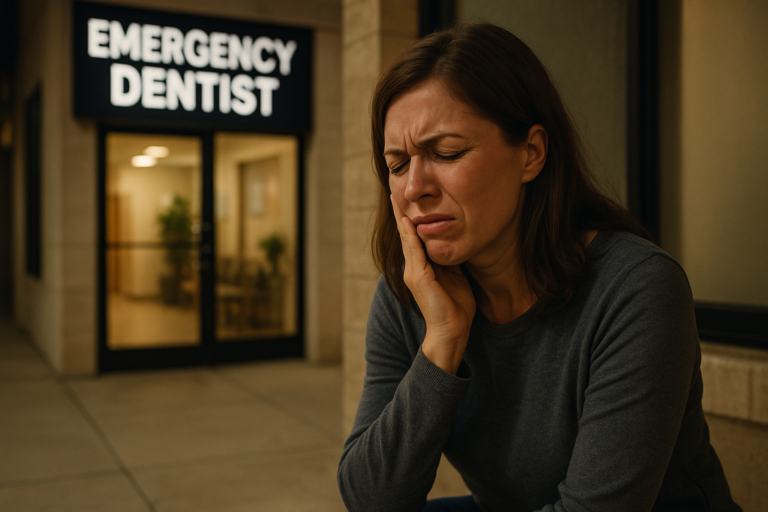
Losing a filling or crown can be alarming, especially if it happens while eating, late at night, during travel, or just before a busy day. In many cases, the tooth underneath is suddenly exposed, which can lead to sensitivity, discomfort, trouble chewing, and worry about making the damage worse.
The good news is that a lost filling or crown emergency is often manageable in the short term if you take the right steps. While a temporary fix for lost filling problems or a loose crown is not a substitute for professional treatment, there are safe ways to protect the tooth until you can be seen by a dentist.
This guide explains what to do if crown falls off, how to reduce discomfort, what to avoid, and when urgent dental care for lost crown or filling issues may be necessary. If your tooth is sensitive after filling fell out, or if the exposed tooth feels sharp, weak, or painful, prompt evaluation is important to help prevent further damage.
Why a Lost Filling or Crown Matters
Fillings and crowns do more than improve appearance. They protect damaged or treated teeth from pressure, bacteria, temperature changes, and daily wear. When one comes off or falls out, the remaining tooth structure may be more vulnerable than you realize.
A lost restoration can lead to:
- Tooth sensitivity to cold, heat, air, or sweets
- Pain with biting or chewing
- Sharp or rough edges that irritate your tongue or cheek
- Food trapping in the open area
- Greater risk of cracking if the tooth is weakened
- Bacterial exposure that can contribute to decay or infection over time
Even if the tooth does not hurt much at first, it is still best not to ignore the problem. Some lost fillings and crowns are painless initially but worsen quickly if the tooth is left unprotected.
First Steps If a Filling Falls Out or a Crown Comes Off
If you notice that a filling is missing or your crown has come off, try not to panic. Take a few careful steps right away.
1. Remove the restoration if it is loose in your mouth
If the crown has detached completely, take it out of your mouth so you do not accidentally swallow or inhale it. If you found it in your food, napkin, or sink, keep it. A dentist may be able to evaluate whether it can be reused in some situations.
If a filling fell out, you may or may not be able to find the piece. If you do find it, bring it with you, although many fillings cannot simply be reinserted.
2. Rinse your mouth gently
Use lukewarm water to rinse away debris. This helps keep the area cleaner and may reduce irritation. Avoid very hot or very cold water if the tooth is sensitive.
3. Check for visible damage
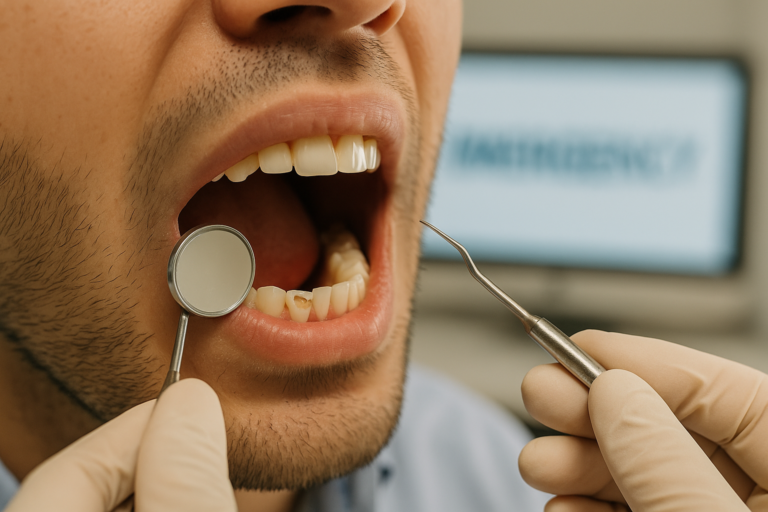
Look in a mirror if possible. You may notice a hole where the filling was, a tooth that looks shorter or oddly shaped, or an exposed area where a crown used to sit. Do not poke the tooth with metal objects or pick at it.
4. Save the crown
If your crown fell off, place it in a small clean container or plastic bag and bring it to your dental visit. Try not to scrub it aggressively or use glue to repair it yourself.
5. Call a dentist promptly
A lost filling or crown is not always a 911-level emergency, but it does deserve timely attention. If you are in pain, have significant sensitivity, cannot bite properly, or notice swelling, you may need urgent dental care for lost crown or filling problems sooner rather than later.
Temporary Fix for Lost Filling Problems
If you cannot get to a dentist immediately, there are a few short-term steps that may help protect the exposed tooth. These are temporary measures only.
Use dental temporary filling material if available
Many pharmacies sell over-the-counter dental repair material designed for temporary use. Follow the package instructions carefully. These products may help cover the exposed area briefly and reduce sensitivity until you can be seen.
Be gentle when placing any temporary material. The goal is to protect the tooth, not force material deep into the space.
Use sugar-free gum only in limited situations
If a pharmacy product is not available, a small piece of sugar-free gum may sometimes be placed over the area briefly to shield a lost filling site. This is only a stopgap measure and should not be used if the tooth is very painful, if there is bleeding, or if the gum sticks in a way that worsens discomfort.
Avoid household adhesives
Do not use super glue, craft glue, hardware adhesive, or other non-dental products inside your mouth. These substances are not safe for oral tissues and may make treatment more difficult.
What to Do If Crown Falls Off
When a crown comes off, the tooth underneath may be intact, sensitive, decayed, or structurally weak. What you should do depends partly on how the tooth feels and whether the crown still seems whole.
Clean the crown gently
If the crown fell out, rinse it gently with water. Do not scrape the inside aggressively, bend it, or try to alter its shape.
Do not force it back into place
Some people try to push a crown back on by biting down. This can damage the crown or tooth if the fit is off, if debris is trapped, or if the tooth underneath has changed.
In some cases, a dentist may advise a very temporary at-home placement with dental cement made for this purpose, but this is not appropriate in every situation. If you are unsure, it is safer to keep the crown stored and have a professional evaluate it.
Protect the exposed tooth
If the uncovered tooth is sensitive, avoid chewing on that side. Stay away from sticky foods, crunchy foods, and extreme temperatures. If pharmacy dental cement is available and appropriate for temporary use, it may help protect the area until your appointment.
How to Reduce Pain and Sensitivity Safely
A tooth sensitive after filling fell out can react strongly to air, cold drinks, sweets, or pressure. You may also feel soreness if the tooth was already inflamed before the restoration came loose.
Short-term ways to reduce discomfort may include:
- Avoid chewing on that side of your mouth
- Choose soft foods such as yogurt, eggs, soup, oatmeal, or smoothies that are not too cold
- Avoid very hot, cold, sugary, or acidic foods and drinks
- Brush gently with a soft-bristled toothbrush
- Rinse with warm salt water if the area feels irritated
- Use over-the-counter pain relief as directed on the label, if appropriate for you
Do not place aspirin directly on the gum or tooth. This will not treat the underlying problem and may irritate or burn the soft tissue.
What to Avoid Until You See a Dentist
Knowing what not to do is just as important as knowing what helps. After a filling or crown is lost, certain habits can worsen the damage.
- Do not chew ice, nuts, hard candy, or crunchy foods on the affected side
- Do not eat sticky foods such as caramel, taffy, or gum that can pull at a weakened tooth
- Do not ignore increasing pain or swelling
- Do not use sharp tools to clean inside the tooth
- Do not delay care for too long, even if symptoms seem mild
A tooth that has lost a large filling or crown may be more fragile than it looks. Additional pressure can cause cracking or breakage that may make treatment more complex.
When It May Be an Urgent Dental Situation
Not every lost filling or crown needs same-minute treatment, but some situations should be addressed as soon as possible. You may need urgent dental care for lost crown or filling issues if you have:
- Significant pain that is persistent or worsening
- Severe sensitivity that makes eating or drinking difficult
- Swelling in the gums, jaw, or face
- Bleeding that does not stop
- A cracked, broken, or sharp tooth after the restoration came off
- Signs of infection such as pus, bad taste, or increasing tenderness
- Difficulty closing your teeth together normally
These symptoms do not automatically mean a serious infection or major damage, but they do mean the tooth should be evaluated promptly by a dental professional.
When to Seek Emergency Medical Care Instead of a Dentist
A lost filling or crown by itself is usually a dental issue, not a hospital emergency. However, some symptoms may point to a potentially life-threatening problem that requires emergency medical services or immediate hospital care.
Seek emergency medical attention right away if you have:
- Trouble breathing or swallowing
- Rapidly spreading facial swelling
- High fever with severe swelling or infection symptoms
- Serious facial trauma involving the jaw or head
- Heavy bleeding that does not stop
These situations go beyond routine emergency dental care and should not wait.
Why Fillings and Crowns Fall Out
There are several reasons a filling or crown may become loose or fall out. Understanding the cause can help explain why prompt treatment matters.
Common reasons include:
- Decay under the restoration that weakens support
- Wear and tear over time
- Biting hard foods or trauma
- Teeth grinding or clenching
- Changes in the tooth structure
- Old cement or bonding material breaking down
Sometimes the restoration itself is still intact, but the tooth underneath has changed enough that it no longer fits securely. In other cases, the restoration may be damaged and need replacement.
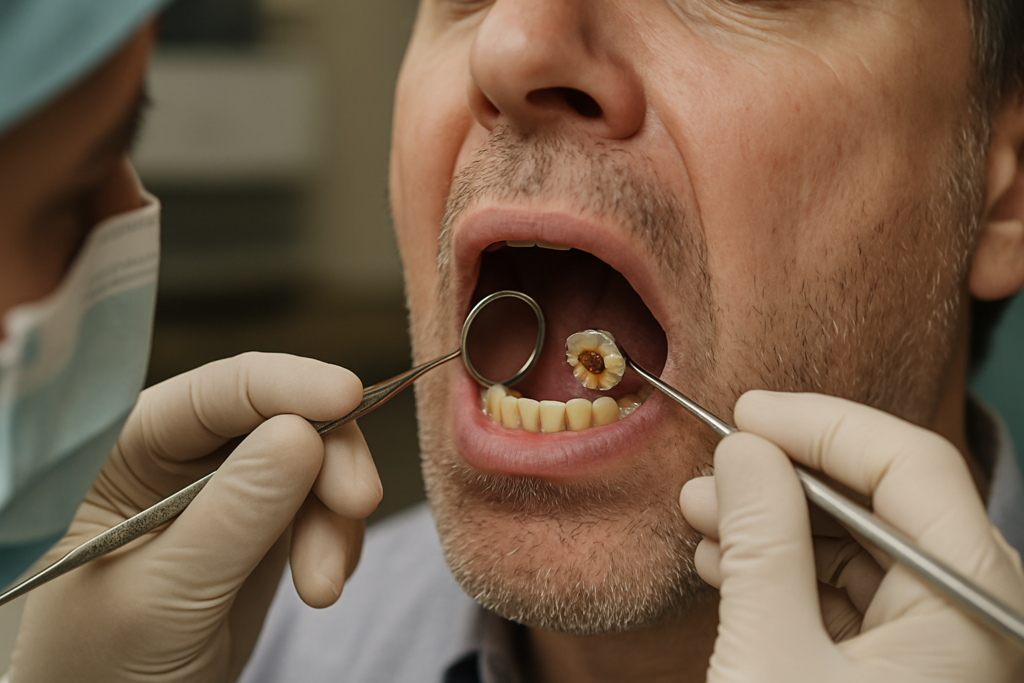
What a Dentist May Do to Treat the Problem
Treatment depends on the condition of the tooth, the lost restoration, and whether there is decay, fracture, or irritation of the nerve.
Your dentist may recommend:
- Replacing the filling if the tooth structure is still suitable
- Placing a new crown if the old one no longer fits or is damaged
- Re-cementing the crown if it is intact and the tooth is appropriate for reuse
- Additional restorative treatment if the tooth has cracked or decayed
- Root canal treatment if the tooth nerve is badly inflamed or infected
- Extraction in more severe cases where the tooth cannot be restored
The right option depends on an in-person exam and, often, X-rays. It is important not to assume that replacing the lost piece is all that will be needed.
If You Are Traveling or Away From Home
Losing a crown or filling while traveling can feel especially stressful. You may not have your usual dentist, your routine supplies, or much flexibility in your schedule. In those situations, focus on protecting the tooth and finding care as soon as you reasonably can.
If you are visiting the area, staying in a hotel, or managing a dental emergency away from home:
- Keep the crown if you have it
- Use temporary dental material from a pharmacy if needed
- Eat soft foods and avoid chewing on the tooth
- Seek a walk-in or urgent dentist if pain, sensitivity, or swelling increases
- Plan for follow-up even if the discomfort improves temporarily
For tourists and visitors, prompt attention can help prevent a vacation disruption from turning into a more complicated dental problem.
How to Help Prevent It From Happening Again
Not every lost restoration can be prevented, but some habits may reduce the chances of repeat problems.
- Keep up with routine dental exams so weak restorations can be identified early
- Avoid chewing hard objects like ice, pens, or popcorn kernels
- Wear a night guard if you grind or clench your teeth and your dentist recommends one
- Brush and floss consistently to reduce decay around fillings and crowns
- Address small issues early before they become urgent
Even well-made restorations do not last forever. Regular checkups can help catch loosening, decay, or wear before a crown falls off or a filling breaks free unexpectedly.
Important Considerations for Children and Older Adults
A lost filling or crown can affect patients of any age, but children and older adults may need extra attention.
For children, sensitivity and difficulty eating can escalate quickly, and they may not clearly explain what they feel. For older adults, existing dental work, dry mouth, reduced dexterity, or underlying health conditions can complicate home care and discomfort management.
In either case, if eating, drinking, or oral hygiene becomes difficult, or if there is notable pain or swelling, prompt professional care is especially important.
Do Not Wait for Severe Pain Before Acting
One of the most common mistakes after losing a filling or crown is waiting until the tooth becomes unbearable. A tooth can be exposed and vulnerable long before severe pain starts. Early treatment may help preserve more tooth structure and reduce the risk of a more involved repair later.
If the area feels odd, looks open, catches food, or reacts to temperature changes, that is enough reason to schedule an appointment. A lost restoration is easier to manage when the problem is addressed before the tooth cracks, shifts, or becomes infected.
Conclusion
A lost filling or crown can leave a tooth exposed, sensitive, and at risk for further damage, but the right immediate steps can help protect it until professional care is available. Rinse gently, save the crown if you have it, avoid chewing on the affected side, and use only safe temporary dental materials when needed. Do not use household glue or ignore worsening symptoms.
Most importantly, remember that a temporary fix for lost filling or crown problems is only meant to buy a little time. If your tooth is sensitive after filling fell out, if your crown has come off, or if pain and swelling are developing, prompt evaluation by a dentist is the safest next step. Timely care can help relieve discomfort, protect the tooth, and prevent a small dental problem from becoming a larger one.