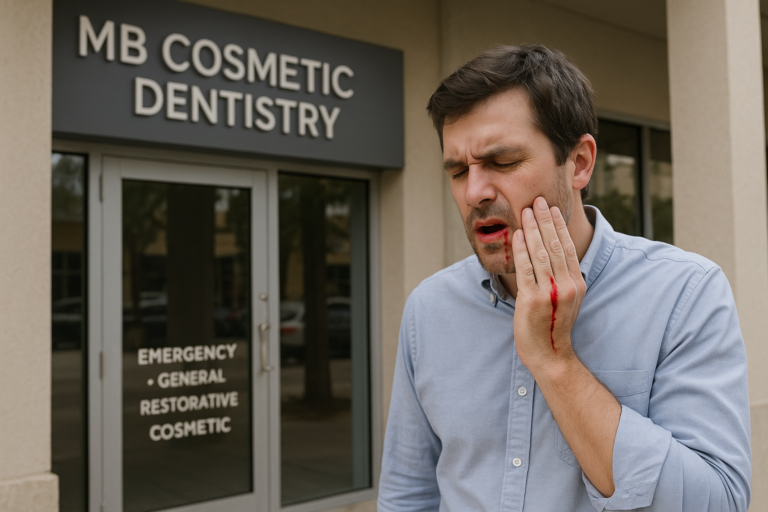
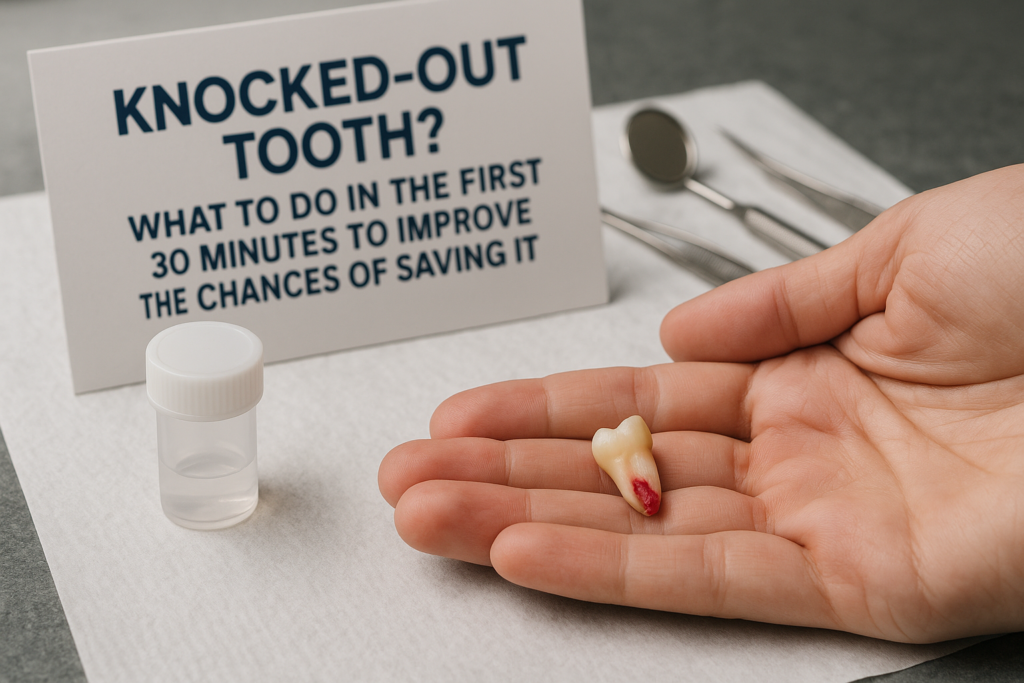
A knocked-out tooth is one of the most time-sensitive dental injuries. In dental terms, this is called an avulsed tooth, which means the tooth has been completely displaced from its socket. Whether it happens during sports, a fall, an accident, or an unexpected blow to the mouth, knowing what to do for a knocked out tooth in the first 30 minutes can make a meaningful difference in whether the tooth can potentially be saved.
This situation can feel alarming, especially when there is bleeding, pain, or uncertainty about the next step. The most important thing is to act quickly, stay as calm as possible, and protect the tooth correctly. Emergency dental care for avulsed tooth injuries is often most successful when the tooth and surrounding tissues are handled promptly and carefully.
This guide explains the practical steps to take right away, what not to do, and when a knocked out tooth emergency may require both dental and medical attention.
Why the First 30 Minutes Matter
When a permanent tooth is knocked out, tiny living cells remain on the root surface. These cells help the tooth reattach successfully if it is placed back into the socket quickly or preserved properly until an urgent dentist for knocked out tooth treatment can be reached. The longer the tooth stays dry or is handled incorrectly, the lower the chance of successful reimplantation.
That is why a knocked-out tooth is different from many other dental injuries. A chipped tooth, a lost filling, or even some types of tooth pain may allow a bit more time before treatment. But when a whole tooth comes out, it should be treated as a true knocked out tooth emergency.
What to Do for a Knocked Out Tooth Immediately
If a permanent tooth has been completely knocked out, take these steps as quickly as possible.
1. Find the tooth right away
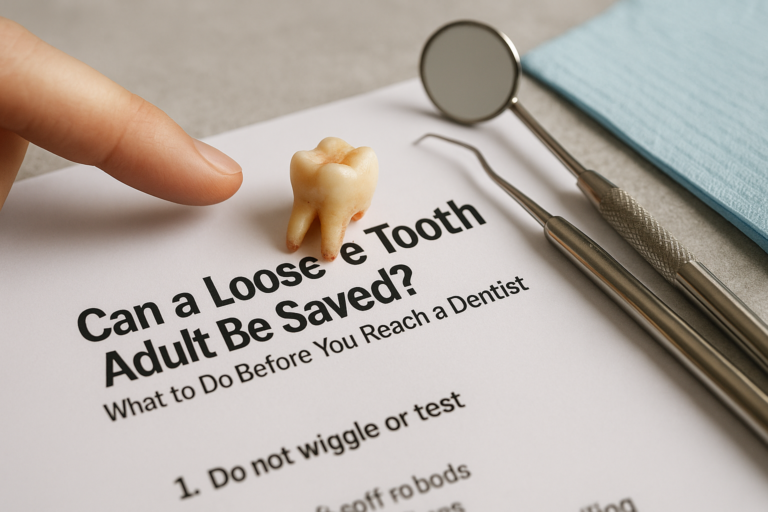
Pick up the tooth carefully and make sure you have the whole tooth, not just a fragment. Hold it only by the crown, which is the part normally visible in the mouth. Avoid touching the root.
Touching or scrubbing the root can damage important surface cells that may help save a knocked out tooth.
2. If the tooth is dirty, rinse it gently
If there is visible dirt or debris on the tooth, rinse it gently for a few seconds with clean water or saline. Do not scrub it. Do not use soap, chemicals, alcohol, or disinfectants. Do not wrap it in tissue or cloth.
The goal is to remove obvious contamination without damaging the root surface.
3. Try to place the tooth back in the socket if possible
If the person is alert, cooperative, and old enough to avoid swallowing the tooth, gently place the tooth back into its socket in the correct direction. It should not be forced. Once it is back in place, the person can bite down gently on clean gauze or a soft cloth to help hold it there.
This is often the best option for a permanent tooth because keeping it in the socket helps protect it from drying out.
4. If you cannot reinsert it, keep the tooth moist
If the tooth cannot be put back into the socket, place it in a suitable storage medium right away. Good options include:
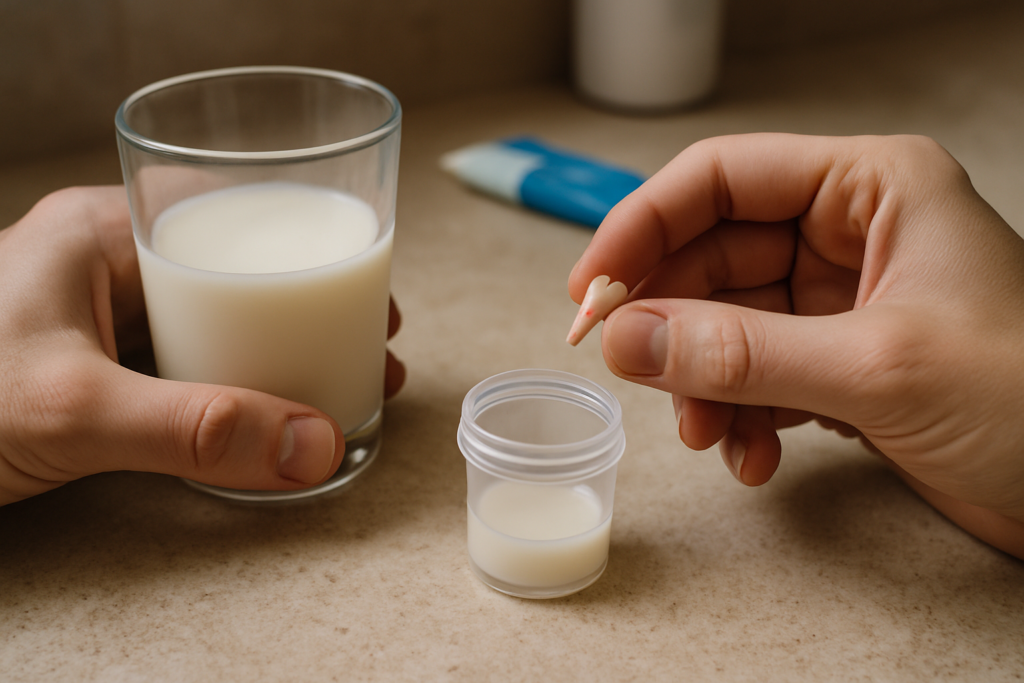
- Cold milk
- Saline solution
- A tooth preservation kit, if available
- Inside the mouth between the cheek and gums, only if the person is old enough and fully able to avoid swallowing it
Do not store the tooth in plain tap water for an extended period if better options are available. Water is better than letting the tooth dry out, but it is not the preferred storage medium.
5. Contact an emergency dentist immediately
Do not wait to see whether the pain improves. Urgent dental care is needed as soon as possible. If you are looking for an emergency dentist in Miami Beach, contacting a dental office right away can help you get guidance on what to do next while traveling to the office.
Even if the tooth has been placed back into the socket, it still needs prompt professional evaluation.
What Not to Do
In a stressful moment, people sometimes try well-meaning steps that can reduce the chances of saving the tooth. Avoid these common mistakes:
- Do not hold the tooth by the root
- Do not scrub, scrape, or brush the tooth
- Do not let the tooth dry out
- Do not store it in tissue, napkin, or a dry container
- Do not delay calling for emergency dental care
- Do not try to force the tooth into place if it will not fit easily
Protecting the tooth gently is often more helpful than trying aggressive home treatment.
Permanent Tooth vs. Baby Tooth: Why It Matters
One of the first questions to consider is whether the knocked-out tooth is a permanent tooth or a baby tooth.
Permanent tooth: A permanent tooth may sometimes be reimplanted if handled quickly and properly. This is the situation where the first 30 minutes are especially important.
Baby tooth: A baby tooth generally should not be replanted at home, because doing so may damage the developing permanent tooth underneath. A child with a knocked-out baby tooth should still be evaluated by a dentist promptly to check for injury to the gums, lips, surrounding teeth, and jaw.
If you are not sure whether the tooth is permanent or baby, contact an emergency dental office for instructions.
How to Control Bleeding and Protect the Mouth
Bleeding is common after a dental injury. In many cases, gentle first aid can help while you arrange emergency dental care.
Apply gentle pressure
Use clean gauze or a clean cloth and apply gentle pressure to the area. If the tooth has been reinserted, have the person bite gently on gauze to help stabilize it.
Use a cold compress
A cold compress on the outside of the face may help reduce swelling and discomfort. Apply it in short intervals rather than leaving it on continuously.
Stay upright
Keeping the head elevated may help reduce bleeding and swelling.
These steps can be helpful, but they do not replace professional treatment.
When a Knocked-Out Tooth Requires Medical Emergency Care
A dental office is often the right place for an avulsed tooth, but some injuries involve more than the tooth alone. Seek emergency medical care or call emergency services if the person has:
- Difficulty breathing or swallowing
- Heavy bleeding that does not slow with pressure
- Loss of consciousness
- Signs of a concussion, such as confusion, vomiting, or unusual drowsiness
- Possible jaw fracture or severe facial trauma
- A tooth that may have been inhaled
In these situations, medical stabilization comes first. Dental treatment can follow once urgent medical needs are addressed.
What an Emergency Dentist May Do
Emergency dental care for avulsed tooth injuries depends on several factors, including how long the tooth has been out, how it was stored, the patient’s age, and whether surrounding tissues were also injured.
At the visit, the dentist may:
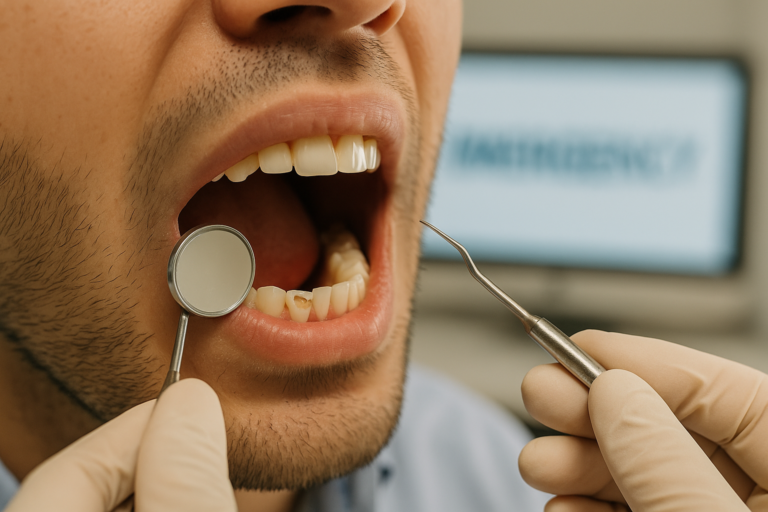
- Examine the tooth, socket, gums, lips, and nearby teeth
- Take dental X-rays to assess the area
- Reposition the tooth if needed
- Stabilize it with a splint
- Evaluate for fractures or additional trauma
- Provide instructions for follow-up care
Some patients may later need additional treatment, such as root canal therapy or restorative care, depending on the extent of the injury. Because every case is different, it is important not to assume the outcome based only on what the tooth looks like right after the accident.
What Recovery May Involve
After a knocked-out tooth is treated, the next several days and weeks matter too. The dentist may recommend a soft-food diet, careful brushing, and follow-up visits to monitor healing. You may also be told to avoid biting directly on the affected area and to watch for signs that the tooth or surrounding gum tissue is not healing as expected.
Recovery can vary depending on:
- How quickly treatment occurred
- Whether the tooth was kept moist
- The condition of the socket and surrounding bone
- The patient’s age and oral health
- Whether other teeth were also injured
Prompt care improves the chances of a better result, but no responsible provider should promise a guaranteed outcome.
Practical Examples of What to Do
It can help to picture what these steps look like in real life.
Sports injury
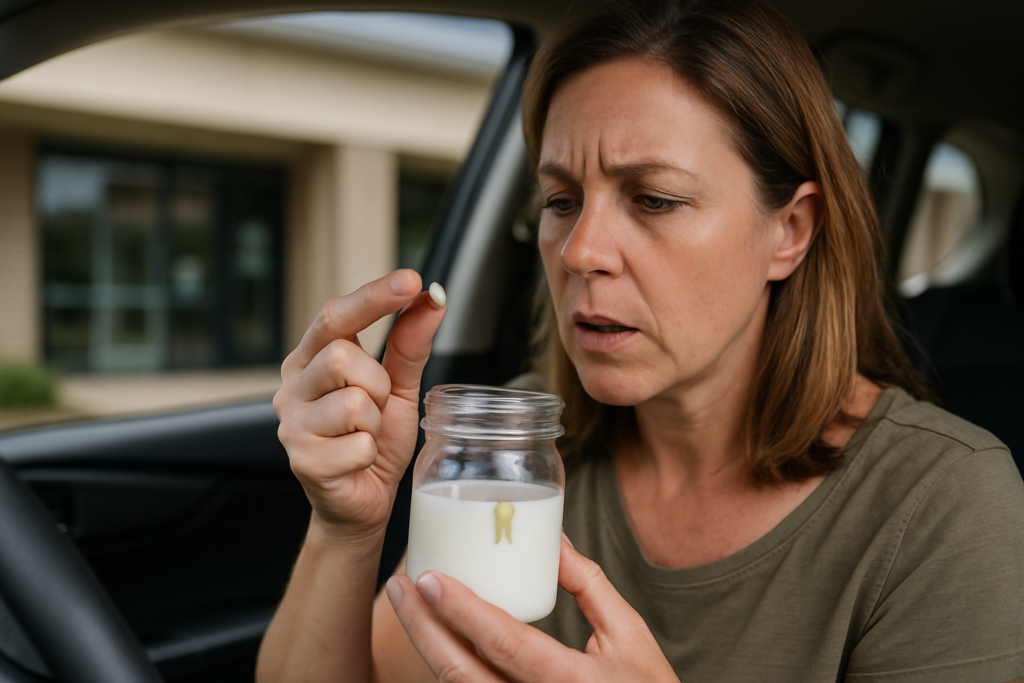
A teenager gets hit in the mouth during a game and a front tooth lands on the ground. A parent picks it up by the crown, rinses it briefly with clean water, and places it in cold milk while heading to an urgent dentist for knocked out tooth care. Acting quickly gives the dentist more options than waiting until the next day.
Fall at home
An adult slips, hits the mouth on a counter, and a tooth comes out. After controlling the bleeding with gauze, the person gently places the tooth back into the socket and seeks same-day emergency dental care. Even though the tooth is back in place, immediate evaluation is still necessary.
Injury while traveling
A visitor experiences a dental injury during a trip and is unsure where to go. In that moment, looking for a walk-in dentist or emergency dentist in Miami Beach can be important if urgent treatment is needed quickly and regular dental care is far from home. This is one reason why emergency dental services are especially valuable for tourists, hotel guests, and travelers dealing with an unexpected dental problem.
Other Dental Injuries That Can Happen at the Same Time
A knocked-out tooth sometimes occurs alongside other dental injuries. The person may also have:
- A broken or chipped tooth
- A loose or displaced tooth
- Cuts to the lips or gums
- Jaw pain or difficulty biting
- Swelling of the face or gums
These issues may affect how the injury is treated. A comprehensive emergency dental exam helps identify problems that are not obvious at first glance.
Why Waiting Can Make the Situation Harder
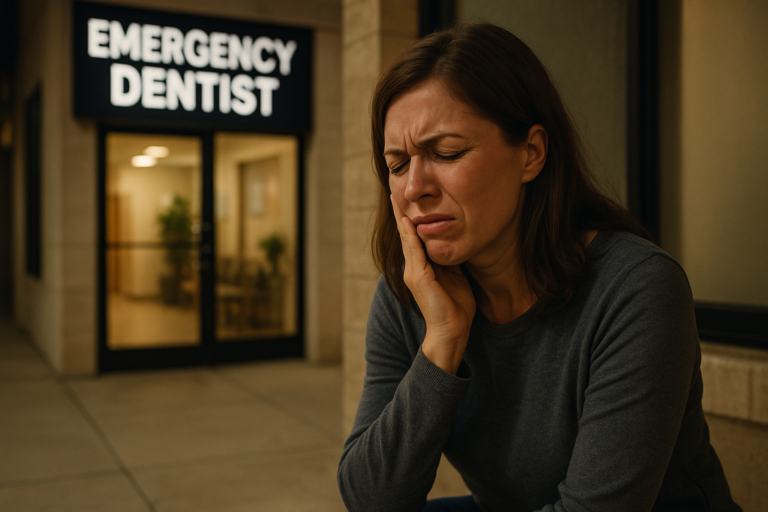
Some people hope the situation can wait until the next day, especially if the bleeding slows or the pain is tolerable. But a knocked out tooth emergency is one of the clearest examples of when waiting can reduce treatment options.
Delays may increase the chance of:
- Drying damage to the tooth root
- Problems with reattachment
- Additional trauma to the socket
- Complications involving neighboring teeth or tissues
If you are trying to save a knocked out tooth, early action is one of the most important factors you can control.
Simple Preparation Tips for Families and Athletes
Although no one expects a dental emergency, a little preparation can help people respond better under stress.
- Keep a small first-aid kit with clean gauze and saline
- Know where to find emergency dental care quickly
- Use a well-fitted mouthguard during contact sports
- Teach older children and teens to handle a tooth by the crown, not the root
These simple habits do not prevent every injury, but they can make a fast response easier.
Connecting This Injury to the Bigger Picture of Emergency Dental Care
Knocked-out teeth are only one part of emergency dentistry. People may also need urgent care for severe toothaches, broken teeth, infections, lost crowns, swelling, or dental injuries that happen after hours or on weekends. Knowing the difference between a routine problem and a true dental emergency can help patients get the right care sooner.
Among all of these situations, however, a completely avulsed permanent tooth stands out because timing is especially important. If you remember only one thing, remember this: keep the tooth moist, handle it carefully, and seek professional help immediately.
Conclusion
A knocked-out tooth can be frightening, but the first 30 minutes offer a real opportunity to improve the chances of saving it. If a permanent tooth comes out, find it quickly, hold it by the crown, rinse it gently if dirty, and either place it back in the socket or keep it moist in milk or saline while getting urgent dental care.
Just as important, avoid common mistakes such as touching the root, scrubbing the tooth, or letting it dry out. A knocked out tooth emergency should be treated promptly by a dental professional, while serious facial trauma, uncontrolled bleeding, breathing problems, or signs of head injury should be treated as medical emergencies.
Fast, careful action does not guarantee a specific result, but it can give the tooth its best possible chance. In a true dental emergency, knowing what to do right away can make all the difference.