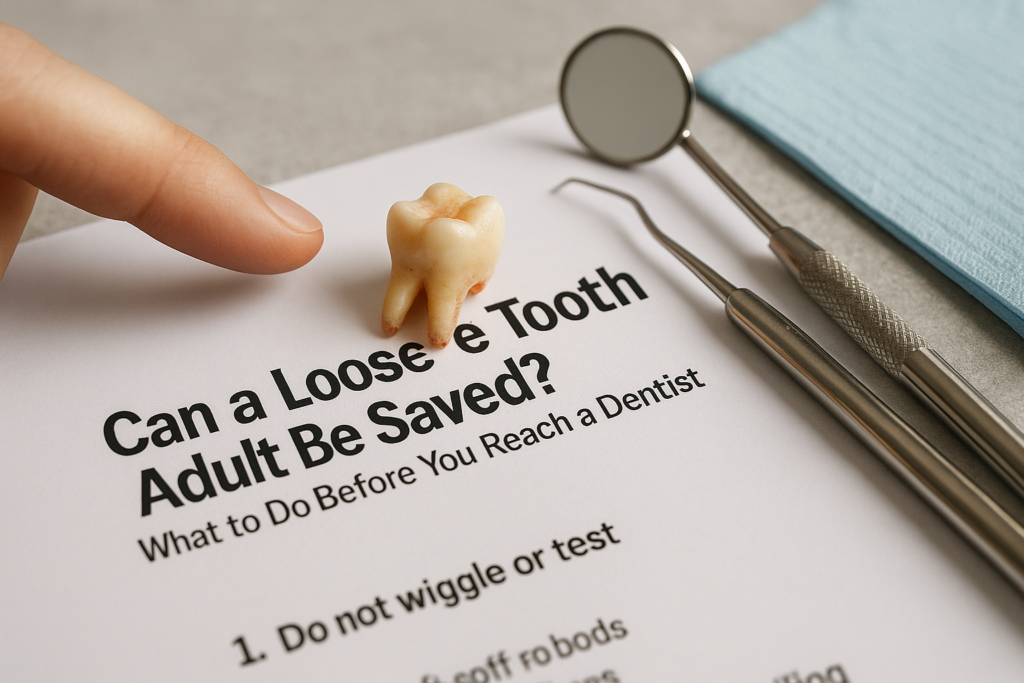
A loose permanent tooth can be frightening, especially if it seems to move when you bite, talk, or touch it with your tongue. Unlike baby teeth, adult teeth are not supposed to loosen. If an adult tooth feels loose, it usually means the tooth, gums, or supporting bone have been affected by trauma, infection, gum disease, bite pressure, or another dental problem that needs prompt attention.
In some cases, a loose adult tooth can be saved. In others, the main goal is to control pain, prevent more damage, and get a dentist to evaluate the tooth as soon as possible. What happens next depends on the cause, how mobile the tooth is, whether there is swelling or bleeding, and how quickly you get care.
This article explains what a loose adult tooth emergency may involve, what to do for a loose permanent tooth before your appointment, and which warning signs mean you may need urgent dental care or emergency medical help.
Why an adult tooth may feel loose
A permanent tooth can feel loose for more than one reason. Some causes are sudden and obvious, while others develop gradually.
Dental injury or trauma
A fall, sports injury, car accident, or blow to the mouth can damage the ligaments and bone that hold a tooth in place. Sometimes the tooth is pushed slightly out of position. Even if there is little pain at first, the tooth may still be at risk.
Gum disease
Periodontal disease can damage the tissues and bone supporting the teeth. A tooth may begin to loosen slowly over time, sometimes with bleeding gums, bad breath, gum recession, or sensitivity.
Infection or abscess
A dental abscess or advanced infection can weaken the supporting structures around a tooth. This may come with swelling, pain when biting, a bad taste in the mouth, or facial puffiness.
Teeth grinding or bite pressure
Clenching and grinding can put repeated force on teeth and the surrounding ligaments. Some people notice that a tooth feels slightly loose or sore, especially in the morning.
Recent dental treatment or bite changes
After dental work, a tooth may feel different, tender, or slightly mobile for a short time. A high filling, bite imbalance, or inflammation around the tooth can create that sensation. This still deserves a professional check if it does not improve quickly.
Root fracture or structural damage
A cracked tooth or root fracture may make a tooth feel unstable. This is not always visible without an exam and dental imaging.
Can a loose adult tooth be saved?
Sometimes yes, but not always. The earlier you get evaluated, the better the chance of protecting the tooth or preventing more serious damage.
A loose adult tooth may be more likely to be saved when:
- The movement is mild rather than severe
- The tooth has not been completely knocked out
- You seek care quickly after trauma
- The surrounding bone and gums are still healthy enough to support treatment
- The problem is due to inflammation, bite trauma, or a treatable infection
A tooth may be harder to save when:
- There is severe bone loss from advanced gum disease
- The root is fractured
- The tooth is extremely mobile
- There is major trauma to the tooth and surrounding structures
- Treatment is delayed and the condition worsens
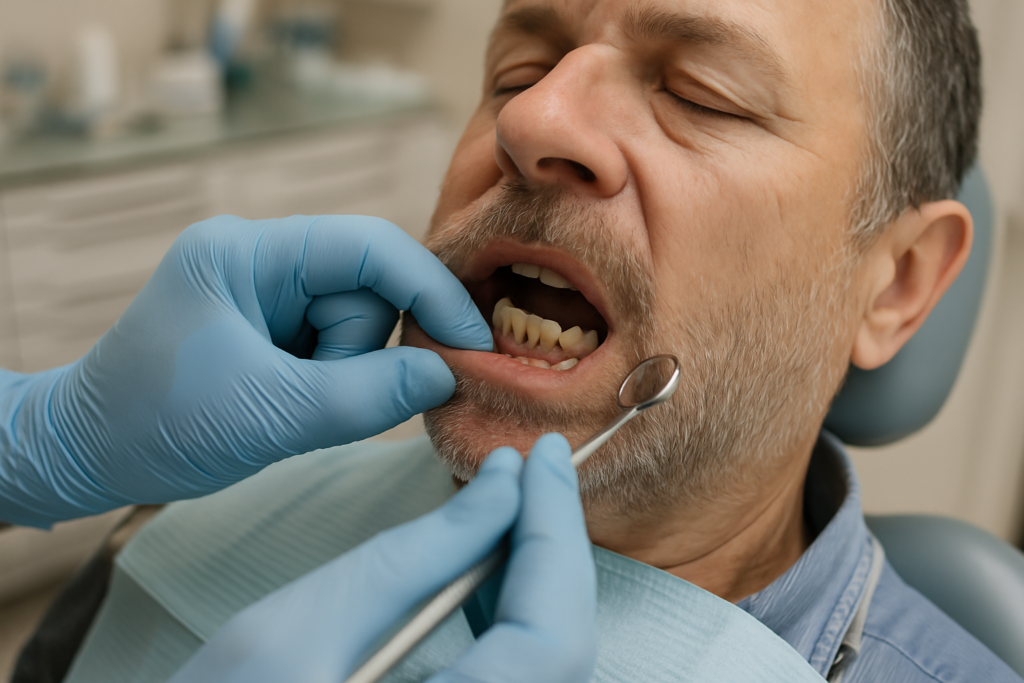
Only a dentist can determine whether the tooth can be stabilized, splinted, treated with root canal therapy, managed with periodontal care, or whether extraction is the safer option.
When a loose tooth is a dental emergency
Not every loose tooth requires a hospital, but many cases do call for prompt dental attention. An urgent dentist for a loose tooth may be appropriate if the tooth suddenly became mobile, pain is increasing, or there are signs of infection or injury.
Try to get urgent dental care the same day or as soon as possible if:
- The tooth became loose after being hit or injured
- You have pain when biting or chewing
- The tooth looks out of place
- There is swelling in the gums, jaw, or face
- You notice pus, drainage, or a bad taste
- The tooth is getting looser
- You have bleeding that does not stop easily
- You cannot bite normally because the tooth feels unstable
A loose adult tooth emergency can sometimes involve more than the tooth itself. Seek emergency medical care or call emergency services right away if there is trouble breathing, trouble swallowing, uncontrolled bleeding, significant facial trauma, suspected jaw fracture, severe swelling spreading into the face or neck, or symptoms such as fever with worsening facial swelling.
What to do for a loose permanent tooth before you reach a dentist
If your adult tooth feels loose, your goal is to protect it from further movement and avoid making the underlying problem worse.
1. Do not wiggle or test the tooth
It is natural to keep checking it with your tongue or fingers, but repeated movement can irritate the supporting tissues and may worsen the injury. Avoid pushing on the tooth to see how loose it is.
2. Eat soft foods and chew on the opposite side
Choose foods that do not require forceful biting, such as yogurt, eggs, smoothies, soup, pasta, or mashed foods. Avoid crusty bread, nuts, ice, hard candy, raw carrots, sticky foods, and chewing gum.
3. Keep the area clean gently
Brush carefully with a soft-bristled toothbrush. If the gums are tender, be extra gentle around the affected tooth. You can rinse with warm salt water to help keep the mouth clean, but do not rinse aggressively.
4. Use a cold compress if there is swelling
If the loose tooth followed trauma or is associated with swelling, apply a cold compress to the outside of the cheek for 15 to 20 minutes at a time. This may help reduce swelling and discomfort.
5. Consider over-the-counter pain relief if appropriate for you
Many people use over-the-counter pain relievers for temporary comfort while arranging care. Follow the package directions and only take medications that are appropriate for your age, health status, and any instructions from your physician. Do not place aspirin directly on the gums or tooth.
6. If the tooth shifted, do not force it back yourself
If the tooth seems moved out of place after an injury, do not try to push, twist, or reposition it on your own unless a dental professional has specifically instructed you to do so. Improper handling may worsen the damage.
7. Contact a dentist promptly
If you think you may need a loose adult tooth emergency visit, call a dental office as soon as possible and describe what happened, when it started, whether there was trauma, and whether you have swelling, bleeding, or severe pain.
What not to do
When people panic, they sometimes make a loose tooth worse. Avoid these common mistakes:
- Do not pull on the tooth
- Do not keep tapping it with your tongue
- Do not bite down repeatedly to check whether it is improving
- Do not ignore swelling, pus, or a foul taste
- Do not delay care because the pain comes and goes
- Do not use household glue or temporary repair products on the tooth or gums
- Do not smoke or vape if the tissues are injured or infected, as this can interfere with healing
Loose tooth after trauma vs loose tooth from gum disease
The next steps can vary depending on the likely cause. This comparison shows why prompt evaluation matters.
| Situation | Common clues | Why prompt care matters |
|---|---|---|
| Loose tooth after trauma | Recent hit to the mouth, sudden mobility, bleeding, pain, tooth looks out of position | The tooth and supporting tissues may be injured but could still be stabilized if treated quickly |
| Loose tooth from gum disease | Gradual loosening, bleeding gums, gum recession, bad breath, bone loss | Untreated periodontal disease can lead to worsening bone loss and possible tooth loss |
| Loose tooth with infection | Swelling, throbbing pain, pus, bad taste, tenderness when biting | Infection may spread and can require urgent treatment to control the source |
| Loose tooth from bite pressure or grinding | Soreness, morning jaw tension, wear on teeth, mild mobility | A bite issue may continue to irritate the tooth unless the underlying force is addressed |
What a dentist may do
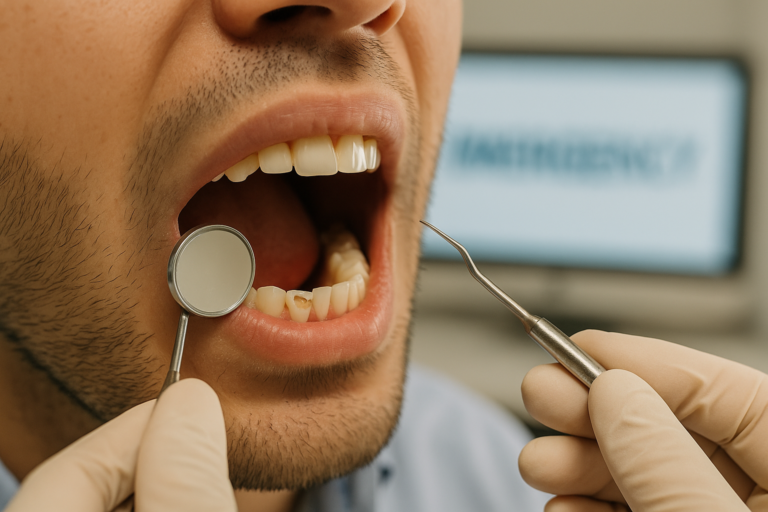
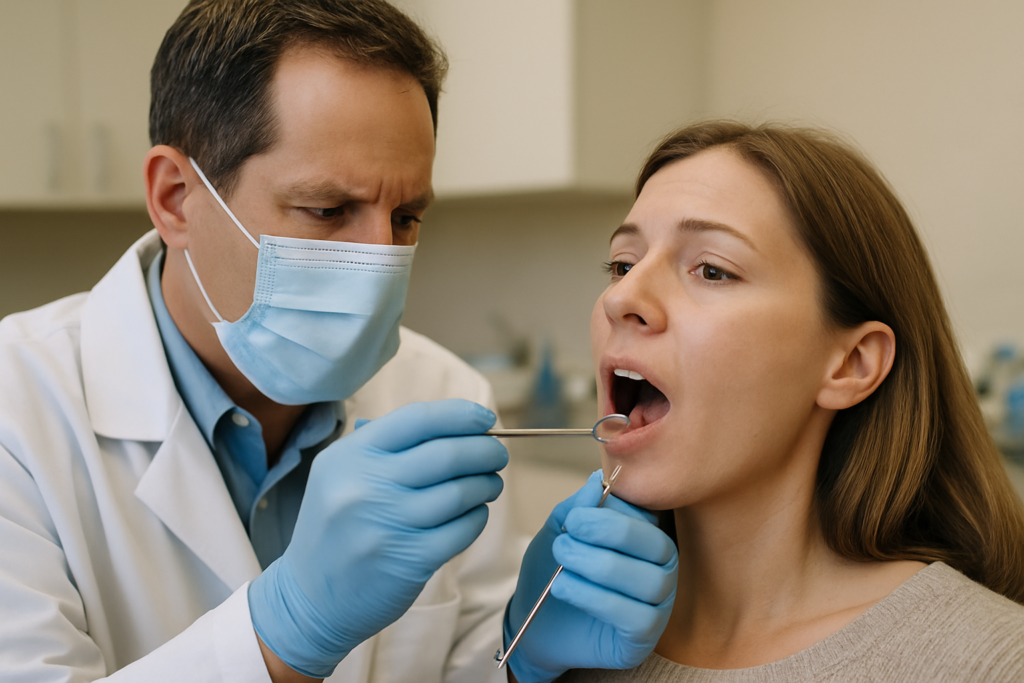
Treatment depends on the cause of the mobility and the overall condition of the tooth. A dentist may examine the gums, test tooth movement, check your bite, and take dental X-rays or other imaging.
Depending on the findings, treatment may include:
- Splinting the tooth to nearby teeth to help stabilize it
- Adjusting the bite if excess pressure is contributing
- Treating gum disease with deep cleaning or periodontal therapy
- Managing infection with drainage or other appropriate treatment
- Root canal treatment if the tooth’s nerve has been damaged
- Monitoring the tooth over time after trauma
- Extracting the tooth if it cannot be predictably saved
This is one reason not to assume the worst right away. A tooth that feels loose does not automatically mean it must be removed. On the other hand, waiting too long may reduce the available options.
Signs the tooth may be getting worse while you wait
If your appointment is not immediate, keep an eye on changes and call back if symptoms worsen. Concerning signs include:
- Increasing looseness
- New swelling of the gums, cheek, or jaw
- Pain that becomes severe or throbbing
- Fever or feeling unwell with dental swelling
- The tooth changing color after an injury
- Difficulty eating, speaking, or closing your teeth together normally
These changes do not confirm a diagnosis, but they can signal that the problem is becoming more urgent.
If a tourist, traveler, or hotel guest has a loose tooth
Dental problems do not always happen at home. A visitor dealing with a loose permanent tooth may be tempted to wait until returning home, especially if the trip is almost over. That can be risky if the tooth was injured, is painful, or is associated with swelling or infection.
If you are traveling and an adult tooth feels loose, it is usually best to contact a local dental office for guidance rather than waiting several days. Be ready to explain whether the problem followed an accident, whether there is swelling, and whether the tooth has become more mobile. If you have a regular dentist at home, you can also request that records be shared later if follow-up treatment is needed.
How to reduce the chance of losing a loose tooth
While you cannot treat the underlying cause by yourself, you can lower the risk of more damage before you are seen.
- Avoid chewing on the affected side
- Switch to soft foods
- Keep the tooth and gums clean without aggressive brushing
- Use a cold compress for swelling after trauma
- Follow medication directions carefully if using over-the-counter pain relief
- Seek timely dental evaluation instead of waiting to see if it settles down
If the issue is related to gum disease or grinding, long-term prevention may include periodontal treatment, better home care, bite adjustment, or a nightguard if a dentist recommends one.
Why fast action matters
People sometimes put off care because the tooth only feels a little loose or the pain is tolerable. Unfortunately, the seriousness of the problem is not always obvious from symptoms alone. A tooth loosened by trauma may have internal damage. A mildly loose tooth may reflect advanced bone loss. Swelling around a loose tooth can indicate infection that needs prompt attention.
Getting checked quickly can help your dentist determine whether the tooth can be stabilized, whether an infection needs urgent treatment, or whether another cause is involved. Early care may also reduce discomfort and help prevent more complicated treatment later.
When to think in terms of urgent dental care
If you are wondering whether this counts as a loose adult tooth emergency, a simple rule is this: if the tooth became loose suddenly, hurts, is moving more than usual, or is associated with swelling, bleeding, or injury, do not wait too long to get advice. An urgent dentist for loose tooth problems can help decide whether you need same-day care.
And again, if you also have major facial swelling, trouble breathing, trouble swallowing, uncontrolled bleeding, or a serious facial injury, seek emergency medical attention right away.
Conclusion
A loose permanent tooth should never be ignored. While some loose adult teeth can be saved, the outcome depends on why the tooth is loose, how quickly you act, and how much damage has already occurred. If an adult tooth feels loose, avoid wiggling it, stick to soft foods, keep the area clean gently, and arrange a dental evaluation as soon as possible.
The most important takeaway is that a loose tooth in an adult is not normal, even if the discomfort seems minor. Prompt professional care gives you the best chance of protecting the tooth, relieving pain, and preventing the problem from becoming more serious.