
A sudden dental problem can be stressful, especially if you have never needed urgent dental care before. If you are dealing with severe tooth pain, a broken tooth, swelling, bleeding, or a dental injury, knowing what happens at an emergency dental visit can make the situation feel more manageable.
In most cases, the goal of an emergency dental appointment process is straightforward: identify the immediate problem, reduce pain or pressure when possible, control infection or bleeding if present, and stabilize the tooth or surrounding tissues. Some patients receive complete treatment the same day, while others receive temporary care first and return for a follow-up visit once the emergency is under control.
This step-by-step guide explains what to expect during a same day dentist visit, how dentists prioritize urgent symptoms, and why prompt evaluation matters. It is meant for general education only and is not a diagnosis. If you have trouble breathing, trouble swallowing, uncontrolled bleeding, significant facial trauma, or rapidly increasing swelling, seek emergency medical care right away rather than waiting for a dental appointment.
When a Dental Problem Becomes an Emergency
Not every dental issue needs same-day treatment, but some symptoms should be evaluated quickly. An emergency dentist typically sees patients for problems such as:
- Severe or worsening toothache
- A broken, cracked, or chipped tooth with pain or sharp edges
- A knocked-out tooth
- A loose or displaced tooth after an injury
- Swollen gums, jaw swelling, or facial swelling
- Possible dental abscess or infection
- Bleeding that does not stop
- A lost filling or crown causing pain or exposing sensitive tooth structure
- Pain after dental work that is intense or getting worse
- Injuries to the lips, gums, cheeks, or tongue
Some problems can wait a day or two, while others are more urgent. For example, a small chip with no pain may not require immediate care, but a knocked-out tooth or swelling near the jaw should be addressed as soon as possible.
Before You Arrive: What Usually Happens When You Call
For many patients, the emergency dental appointment process begins with a phone call. The dental team will usually ask questions to understand the situation and determine how quickly you should be seen. You may be asked:
- What happened and when it started
- Whether you have pain, swelling, bleeding, or fever
- Whether the tooth is broken, loose, or completely out
- Whether you are having trouble eating, sleeping, swallowing, or opening your mouth
- What medications you take and whether you have health conditions or allergies
This initial conversation helps the office decide whether you need an urgent same day dentist visit, a next-day evaluation, or emergency medical care instead of a dental visit.
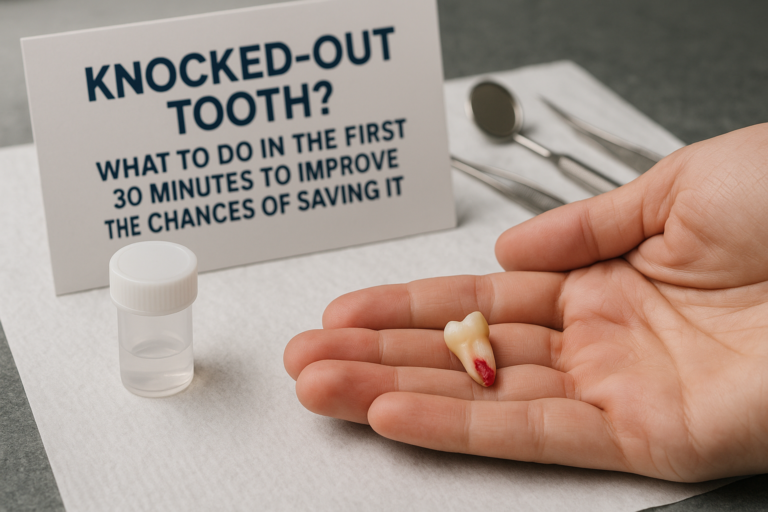
You may also receive first-aid instructions for the time before your appointment. For example, if a tooth has been knocked out, you may be told to hold it by the crown rather than the root and keep it moist. If there is swelling, you may be told to use a cold compress on the outside of the face. If there is bleeding, you may be instructed to apply gentle pressure with clean gauze.
Step 1: Check-In and Emergency Triage
When you arrive, the first part of the visit is usually focused on gathering essential information quickly. If you are in obvious discomfort, the team will generally prioritize your immediate needs while still completing important intake steps.
At check-in, you may be asked to provide:
- Your medical history
- Current medications
- Allergies
- Dental history
- Insurance information if applicable
- A description of your symptoms and how long they have been happening
In a walk in emergency dentist setting, what to expect is often a faster version of standard new-patient paperwork, followed by triage. Triage means the team looks at how urgent the problem appears. Patients with active bleeding, trauma, severe swelling, or intense pain are generally moved through evaluation promptly.

If you are a first-time patient, it is helpful to bring a photo ID, a list of medications, and the name of your primary physician if you have significant medical conditions.
Step 2: The Dentist Examines the Problem Area
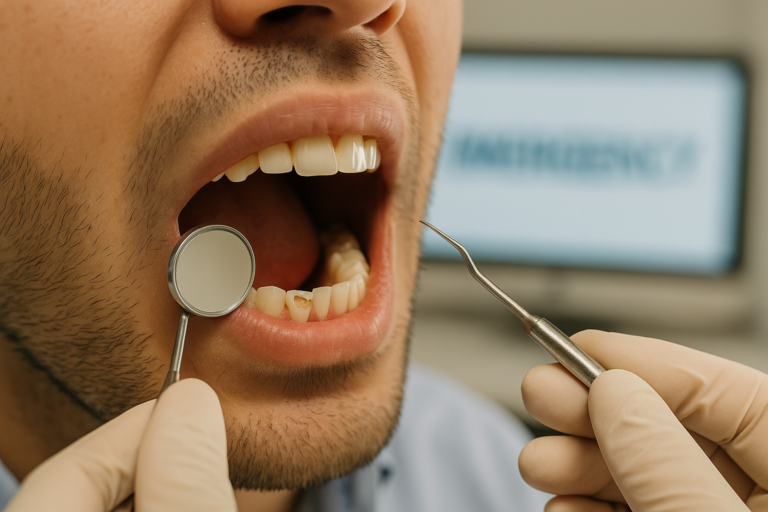
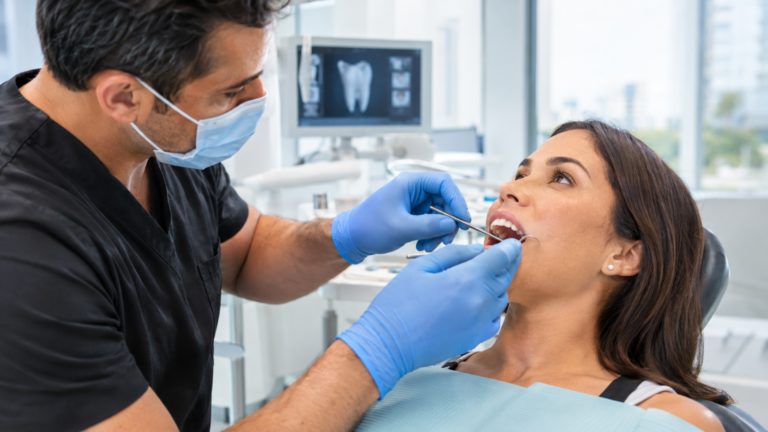
After check-in, a dentist or clinical team member will evaluate the affected area. This exam is usually more focused than a routine dental checkup because the goal is to identify the source of the emergency.
During the exam, the dentist may look for:
- Visible fractures, chips, or tooth movement
- Swelling in the gums, jaw, or face
- Signs of infection, drainage, or abscess formation
- Sensitivity to pressure, temperature, or tapping
- Damage to restorations such as crowns or fillings
- Soft tissue injuries inside the mouth
- Bite changes after trauma
The dentist may gently test the tooth or surrounding tissues to understand whether the pain is coming from the tooth itself, the gums, the nerve, the supporting bone, or the bite. Because different conditions can cause similar symptoms, this step is important. Severe tooth pain does not always mean the same treatment is needed.
Step 3: X-Rays or Other Imaging
Many emergency dental visits include X-rays. Imaging helps the dentist see issues that may not be visible during a simple visual exam, such as:
- Decay reaching the nerve
- An infection at the root
- A crack extending below the gumline
- Bone damage after trauma
- The position of a tooth that has been loosened or displaced
- Problems under an old filling or crown
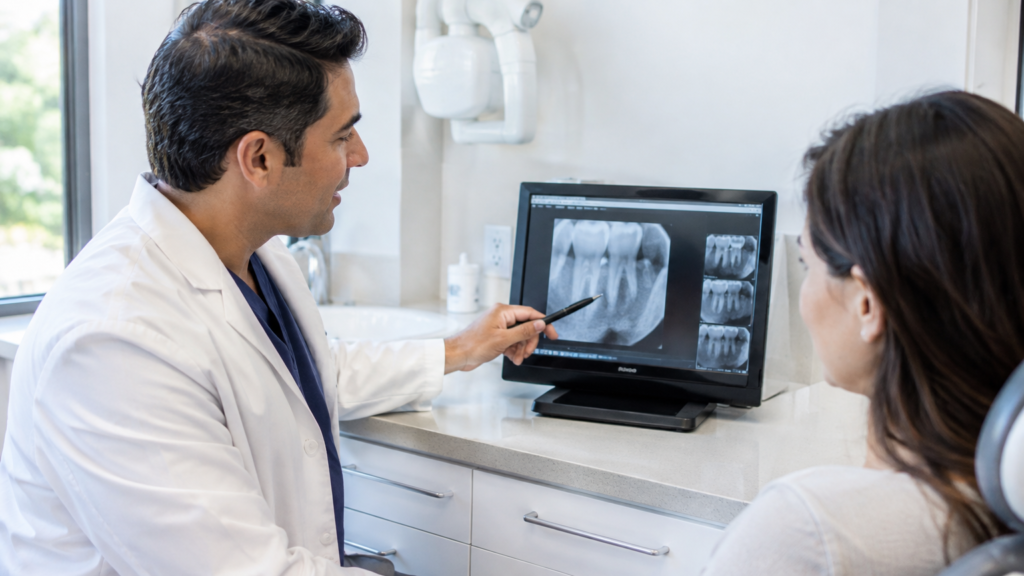
X-rays are often an important part of understanding what happens at an emergency dental visit, because they help the dentist decide whether the problem can be treated right away, temporarily stabilized, or referred for more advanced care.
Not every patient needs the same type of imaging. A simple bitewing or periapical X-ray may be enough in some cases. In others, especially with trauma or complex infection, the dentist may recommend additional imaging.
Step 4: The Dentist Explains the Findings
Once the exam and any imaging are complete, the dentist will explain what appears to be causing the emergency and what the immediate next steps are. This discussion usually covers:
- What the likely problem is
- Whether treatment is needed right away
- What can be done today
- Whether temporary care or definitive treatment is more appropriate
- What symptoms to watch for after the visit
If you are in pain, this part of the visit can bring a lot of relief because it gives you a clear plan. In some situations, the full treatment can be completed at that same day dentist visit. In other cases, the emergency appointment is focused on stabilizing the problem first.
The dentist may also explain if your symptoms raise concern for a condition that needs a medical evaluation instead of or in addition to dental care, such as spreading facial swelling or signs of a more serious infection.
Step 5: Immediate Treatment to Relieve Pain or Stabilize the Tooth
The treatment done during an emergency visit depends on the cause of the problem. Emergency care is often about stopping the situation from getting worse and making you more comfortable while protecting your oral health.
Common same-day emergency treatments
- Temporary or permanent filling: If a cavity, lost filling, or minor fracture is causing pain, the dentist may place a filling or protective material.
- Crown re-cementation or replacement planning: If a crown has come off, it may sometimes be reattached if the tooth structure is suitable.
- Smoothing a broken tooth: A sharp or jagged edge may be polished or covered to protect the tongue and cheeks.
- Drainage of an abscess when appropriate: Some infections need pressure relief and prompt treatment, though the exact approach depends on the source.
- Emergency root canal access or pulpal treatment: If the nerve is inflamed or infected, treatment may be started to relieve pressure and pain.
- Emergency tooth extraction: If a tooth is severely damaged and cannot be saved, extraction may be recommended.
- Repositioning and splinting: A loose or displaced tooth after trauma may need stabilization.
- Care for soft tissue injuries: Cuts inside the mouth may be cleaned and assessed for additional treatment needs.
Not every emergency can be fully resolved in one appointment. For example, a patient with a major infection may need immediate care to control the source and then return for further treatment. A patient with a badly fractured tooth may receive temporary protection first, followed by a crown or other restorative work later.
What Different Emergencies Often Require
| Dental problem | What the emergency visit may involve | Why quick evaluation matters |
|---|---|---|
| Severe toothache | Exam, X-rays, pain source evaluation, possible filling, root canal planning, or temporary treatment | Pain may come from deep decay, infection, a crack, or bite trauma |
| Broken or chipped tooth | Smoothing sharp edges, bonding, protective covering, X-rays, or extraction planning if severe | Untreated fractures can worsen or expose the nerve |
| Knocked-out tooth | Urgent assessment, possible reimplantation, stabilization, and follow-up care | Timing can affect whether the tooth can be saved |
| Swelling or abscess | Exam, imaging, treatment to address the source, and close monitoring instructions | Dental infections can spread and should not be ignored |
| Lost filling or crown | Evaluation of the remaining tooth, temporary coverage, re-cementation, or restoration replacement | Exposed tooth structure may be painful and more vulnerable to damage |
Step 6: Pain Management and Home-Care Instructions
One of the biggest concerns for first-time patients is whether the visit will help with pain. While no ethical dentist can guarantee instant or complete relief in every case, emergency treatment is typically directed at the underlying cause of the discomfort whenever possible.
Before you leave, you will usually receive instructions on how to care for the area at home. These may include guidance about:
- Eating soft foods for a period of time
- Avoiding chewing on the treated side
- Using a cold compress for swelling
- Taking medications exactly as directed
- Keeping the area clean without irritating it
- Watching for worsening pain, swelling, fever, or bleeding
If medication is part of your care plan, the dentist will explain how it fits into your treatment. Antibiotics are not appropriate for every dental problem, so whether they are prescribed depends on the specific findings. Pain management recommendations also vary based on your health history and the procedure performed.
Step 7: Planning Follow-Up Care
Many dental emergencies involve two phases: immediate care and definitive care. The emergency visit addresses the urgent issue, but you may still need another appointment to fully restore the tooth or complete treatment.
Common examples include:
- A temporary restoration followed by a permanent filling or crown
- Initial emergency root canal care followed by completion of the procedure and final restoration
- Extraction of a severely damaged tooth followed by discussion of replacement options such as a bridge, denture, or dental implant
- Monitoring a traumatized tooth to check healing over time
This follow-up planning is an important part of the emergency dental appointment process. Pain may improve quickly, but the underlying issue still needs proper treatment to reduce the risk of recurrence.
What to Expect Emotionally During a First Emergency Visit
It is normal to feel anxious, embarrassed, or overwhelmed when you need urgent dental care. Some patients worry they waited too long. Others are concerned about pain, cost, or whether the tooth can be saved. A first emergency visit is often less complicated than people imagine. The appointment is usually focused, practical, and centered on the immediate problem.
If you are nervous, it can help to:
- Describe your symptoms clearly and honestly
- Tell the team if you are anxious
- Ask the dentist to explain each step before starting
- Let them know if your pain changes during the exam
- Bring a list of questions or medications if needed
Knowing walk in emergency dentist what to expect can reduce uncertainty. The dental team’s priority is to understand the problem and help you move safely toward relief and recovery.
Special Considerations for Tourists, Travelers, and Weekend Dental Problems
Dental emergencies do not always happen close to home. A lost crown during a trip, a broken tooth at a restaurant, or a sudden toothache over the weekend can be especially disruptive if you are away from your regular dentist.
In those situations, it helps to be prepared to share:
- Any recent dental work you have had
- The name of your regular dentist if available
- A list of medications and allergies
- Any photos or records you can access on your phone
A weekend emergency dentist or urgent dental office may focus first on stabilizing the issue so you can continue your travel plans or return home safely. Depending on the situation, they may also recommend follow-up with your regular dentist after the emergency is handled.
When to Go to the Hospital Instead of the Dentist
Some symptoms go beyond routine emergency dental care and may require emergency medical attention. Go to an emergency room or call emergency services if you have:
- Difficulty breathing
- Difficulty swallowing
- Rapidly spreading swelling of the face or neck
- Heavy bleeding that does not stop with pressure
- Major facial trauma or possible broken jaw
- High fever with significant swelling and feeling seriously unwell
An emergency dentist treats many urgent oral health problems, but life-threatening conditions should be handled through emergency medical services first.
Why Prompt Care Matters
Waiting can make some dental problems harder to treat. A small crack can deepen. A minor infection can spread. A lost filling can lead to more damage if the exposed tooth is left unprotected. Seeking care promptly does not mean every situation is severe. It simply improves the chances of controlling the problem before it becomes more painful, more complicated, or more expensive to fix.
That is why patients searching for an urgent dentist, emergency dental care, or a same day dentist visit are often better served by getting evaluated sooner rather than hoping the issue goes away on its own.
Conclusion
If you have never had urgent dental treatment before, understanding what happens at an emergency dental visit can make the experience feel far less intimidating. In most cases, the visit includes check-in and triage, an exam, X-rays when needed, an explanation of the problem, immediate treatment to relieve pain or stabilize the area, and a plan for follow-up care.
Whether the issue is a severe toothache, broken tooth, knocked-out tooth, swelling, infection, or lost restoration, the purpose of the emergency dental appointment process is to address the immediate concern safely and efficiently. The best next step is usually prompt professional evaluation, especially when symptoms are painful, worsening, or affecting normal daily activities. For personal advice about your condition, consult a qualified dental professional as soon as possible.