When a child suddenly chips a tooth, develops severe tooth pain, or starts bleeding after a fall, many parents are left wondering what to do first. A children dental emergency can feel overwhelming, especially when a child is scared, crying, or unable to explain exactly what hurts. The first few minutes matter, not because every situation is life-threatening, but because calm, informed action can help protect the tooth, reduce discomfort, and guide you toward the right kind of care.
Not every dental problem requires immediate treatment the same day, but some do. Knowing the difference between a minor issue and a true urgent problem helps parents act with confidence. This guide explains what to do after a tooth injury in child patients, how to respond to pain, swelling, or bleeding, and when a child needs urgent dental care rather than routine follow-up.
This article is for general education only and is not a diagnosis. If your child has trouble breathing, uncontrolled bleeding, significant facial trauma, is losing consciousness, or has swelling that seems to affect breathing or swallowing, seek emergency medical care right away.
Stay calm and check the basics first
The most helpful first step is often the simplest: pause and assess the situation. Children tend to mirror a parent’s reaction. If you stay calm, your child is more likely to settle enough for you to see what happened.
Start with these basic checks:
- Look for bleeding from the mouth, lips, gums, or tongue.
- Ask where it hurts and whether the pain is sharp, throbbing, or worse when biting.
- Check whether any tooth looks cracked, loose, pushed out of place, or missing.
- Notice swelling in the gums, face, or jaw.
- Ask whether the child hit their head, feels dizzy, or seems unusually sleepy.
If there was a fall, sports injury, or impact to the face, remember that dental injuries may happen alongside lip cuts, jaw injuries, or head trauma. A kids emergency dentist may be the right next step for the teeth, but some injuries should be evaluated by a physician or emergency room first.
When a child needs urgent dental care
Parents often worry about overreacting. In reality, it is reasonable to contact a dental office promptly when a child has significant pain or visible damage. In general, when a child needs urgent dental care, the concern usually involves one or more of the following:
- A permanent tooth that has been knocked out, loosened, or moved out of position
- A broken or chipped tooth with pain, bleeding, or exposed inner tooth structure
- Persistent or severe toothache
- Swelling of the gums, face, or jaw
- Bleeding that does not stop with gentle pressure
- Signs of dental infection, such as swelling, pus, bad taste, or increasing pain
- A tooth injury after a fall or sports accident
- Pain that prevents eating, sleeping, or normal activity
Some situations can wait for a routine appointment within a day or two, while others should be handled the same day. The table below can help parents understand that difference.
| Situation | What parents should do first | Urgency |
|---|---|---|
| Knocked-out permanent tooth | Find the tooth, hold it by the crown, keep it moist, and call a dentist immediately | Same-day urgent dental care |
| Knocked-out baby tooth | Control bleeding and contact a dentist for advice | Urgent, but usually not reimplanted |
| Chipped tooth without pain | Rinse the mouth and schedule prompt dental evaluation | Soon, not always immediate |
| Broken tooth with pain or bleeding | Rinse gently, use a cold compress, and call a dentist promptly | Same-day evaluation often needed |
| Severe toothache or swelling | Contact a dentist promptly for assessment | Urgent |
| Facial swelling with fever, trouble swallowing, or trouble breathing | Seek emergency medical care right away | Medical emergency |
| Bitten lip or tongue with uncontrolled bleeding | Apply pressure and seek urgent medical or dental guidance | Urgent |
What to do for a knocked-out tooth
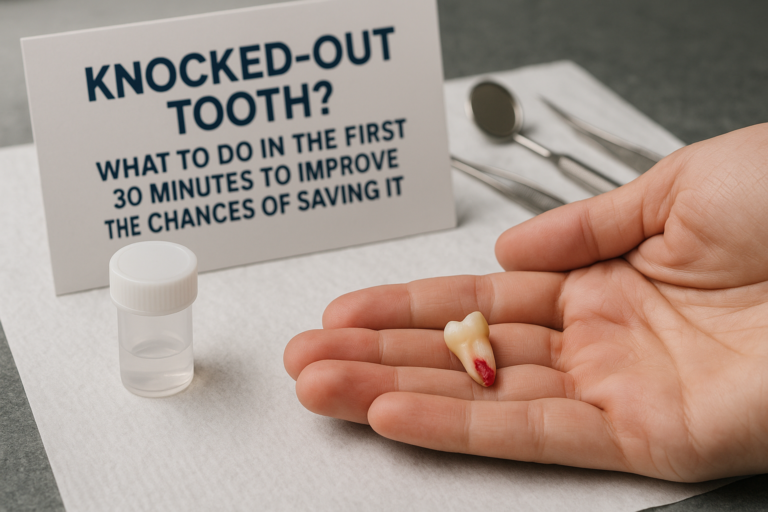
A knocked-out tooth is one of the clearest examples of a children dental emergency. The right response depends on whether the lost tooth is a baby tooth or a permanent tooth.
If a permanent tooth is knocked out
This is time-sensitive. Quick action may improve the chance that the tooth can be managed appropriately.
- Find the tooth and pick it up by the crown, not the root.
- If it is dirty, rinse it gently with milk or saline. If neither is available, a brief gentle rinse with water may help. Do not scrub it.
- If advised by a dental professional and if appropriate, the tooth may sometimes be placed back into the socket by an adult. Do not force it.
- If you cannot do that, keep the tooth moist in milk or a tooth-preservation solution if one is available. Do not leave it dry.
- Call a kids emergency dentist immediately.
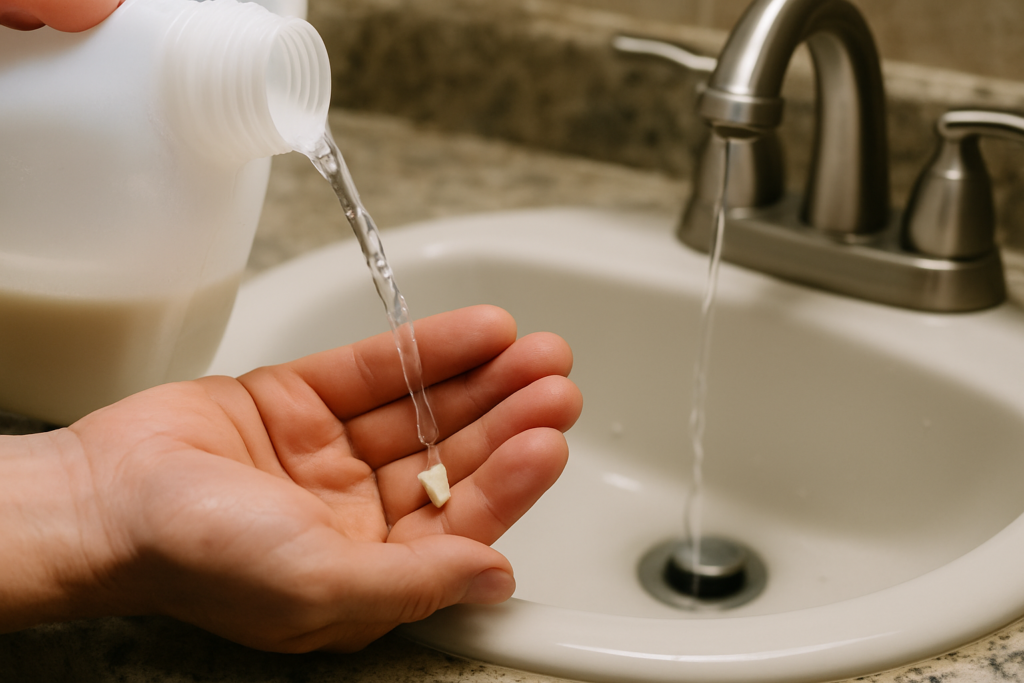
Time matters with permanent teeth. The sooner your child is evaluated, the better.
If a baby tooth is knocked out
A knocked-out baby tooth is handled differently. Parents should not try to put a baby tooth back into the socket, because doing so may injure the developing permanent tooth underneath. Instead:
- Apply gentle pressure with clean gauze if there is bleeding.
- Use a cold compress on the outside of the face for swelling.
- Contact a dentist promptly for guidance and follow-up.
Even though baby teeth are temporary, they still matter for chewing, speech, comfort, and guiding permanent teeth into place.
How to respond to a chipped, cracked, or broken tooth
A broken or chipped tooth may range from minor enamel damage to a painful fracture involving deeper tooth layers. If there has been a tooth injury in child patients, avoid assuming it is minor just because the child seems okay at first.
What to do first:
- Rinse the mouth gently with lukewarm water.
- If possible, save any tooth fragments.
- Apply a cold compress to reduce swelling.
- Avoid giving very hot, very cold, or hard foods.
- Contact a dentist for instructions.
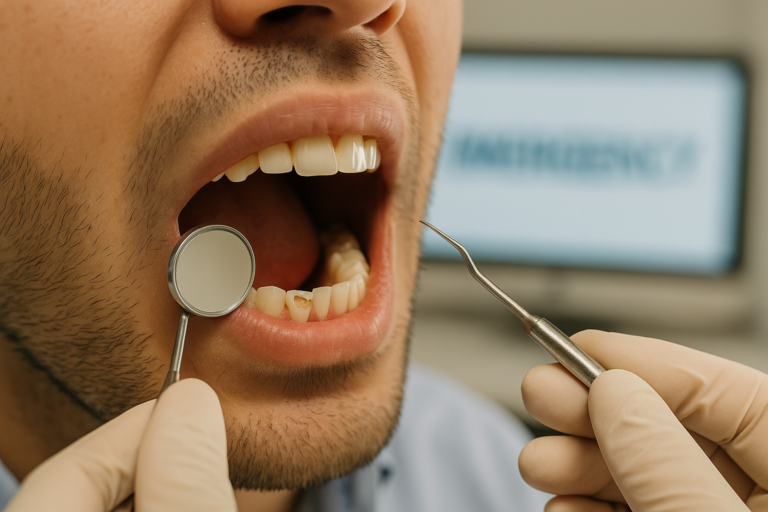
If the tooth looks yellow, pink, or dark in the center, or if there is pain when air or liquids touch it, the deeper part of the tooth may be involved. That increases the need for prompt evaluation.
What severe tooth pain may mean
Not every toothache is an emergency, but severe tooth pain in a child should not be ignored. A persistent toothache may be caused by decay, infection, inflammation, trauma, food trapped between teeth, or a loose or erupting tooth. Because many causes can feel similar, it is important not to self-diagnose.
You can take a few sensible steps while arranging care:
- Rinse with lukewarm water.
- Gently floss near the painful area in case food is lodged between teeth.
- Use a cold compress on the outside of the cheek if there is swelling.
- Follow the child’s physician or dentist guidance for age-appropriate pain relief.
- Do not place aspirin directly on the gums or tooth.
Call a dentist promptly if the pain is intense, wakes the child at night, is associated with swelling, or continues rather than improving.
Swelling, abscess, and signs of infection
Swelling in the gums, jaw, or face can point to infection and deserves prompt attention. A dental abscess may cause pain, pressure, a bad taste in the mouth, gum swelling, or facial puffiness. Some infections begin with a cavity or injured tooth and worsen over time if not treated.
Parents should seek urgent dental care if a child has:
- Gum swelling near a painful tooth
- A bump on the gum that drains fluid
- Facial swelling on one side
- Fever along with dental pain or swelling
- Increasing pain when chewing
If swelling becomes significant or the child has trouble breathing, trouble swallowing, seems very ill, or is difficult to wake, seek emergency medical care immediately. Those signs go beyond a routine dental concern.
Bleeding from the mouth after an injury
Bleeding can look dramatic in children, especially when mixed with saliva, but not all oral bleeding means a severe tooth injury. Sometimes the tooth is intact and the main problem is a cut to the lip, cheek, or tongue.
What parents should do first:
- Gently rinse with water if the child can do so safely.
- Apply clean gauze or cloth with light pressure to the area.
- Use a cold compress outside the mouth to reduce swelling.
- Check whether the bleeding is from soft tissue, the gums, or around a tooth.
If bleeding continues despite steady pressure, or if there is a deep cut, seek urgent care. Soft tissue injuries can also require professional treatment.
A loose, displaced, or pushed-in tooth
After a fall or collision, a tooth may not fall out completely but may become loose, pushed backward, pushed inward, or look longer or shorter than the teeth next to it. This is an urgent reason to call a dentist.
Parents should not try to force the tooth back into position. Have the child avoid biting on it, offer soft foods only, and arrange prompt professional evaluation. This applies to both baby and permanent teeth, though the treatment approach may differ.
What if a filling, crown, or dental appliance comes off?
Some children have fillings, crowns, space maintainers, or orthodontic appliances. If one comes loose or breaks, the next step depends on whether there is pain or injury.
Call a dentist soon if:
- A filling falls out and the child has sensitivity or pain
- A crown comes off and the tooth feels exposed
- A broken appliance is poking the cheek or gums
- A wire or bracket causes bleeding or significant discomfort
If there is no pain and no sharp edge, this may not require immediate emergency treatment, but it still should not be ignored.
How to comfort a child while you wait for care
Children often remember how supported they felt during an emergency just as much as they remember the injury itself. While waiting for urgent dental care, simple reassurance helps.
- Use a calm, steady voice.
- Explain what is happening in age-appropriate terms.
- Offer a cold compress for swelling.
- Keep the child from chewing on the injured side.
- Choose soft foods if they are hungry.
- Follow professional guidance for safe pain relief based on age and health history.
Avoid home remedies that may irritate the mouth or delay proper treatment. The goal is comfort and protection until the child can be evaluated.
When to go to the emergency room instead of the dentist
A kids emergency dentist is often the right professional for tooth injuries and dental pain, but some situations call for hospital-level care or emergency medical services first.
Seek emergency medical attention right away if your child has:
- Difficulty breathing or swallowing
- Rapidly spreading facial swelling
- Heavy bleeding that does not stop
- Head injury symptoms such as vomiting, confusion, fainting, or unusual drowsiness
- Possible jaw fracture or inability to open or close the mouth properly
- High fever with serious swelling or signs of severe infection
Once the child is medically stable, dental follow-up may still be needed.
What not to do during a children dental emergency
Well-meaning parents sometimes make the situation harder by trying too much too quickly. A few common mistakes are worth avoiding:
- Do not ignore a painful or damaged tooth because it is a baby tooth.
- Do not scrub a knocked-out permanent tooth.
- Do not hold a knocked-out tooth by the root.
- Do not try to reinsert a baby tooth.
- Do not place aspirin directly on gums or teeth.
- Do not wait several days if there is swelling, significant pain, or a displaced tooth.
Simple, protective steps are usually best until a dental professional gives instructions.
Why prompt evaluation matters even when the injury seems small
Some dental injuries look minor at first but later lead to discoloration, nerve problems, infection, or bite changes. A small chip may hide a crack. A tooth that seems fine after a bump may later loosen or darken. Pain may also be delayed, especially in younger children who struggle to describe what they feel.
That is why it is wise to arrange follow-up after a notable tooth injury in child patients, even if the immediate symptoms seem manageable. Early evaluation can help identify hidden problems and give parents clear instructions on what to watch for over the next several days.
Prevention tips for future emergencies
Not every dental emergency can be prevented, but some can. Parents can lower risk by focusing on a few practical habits:
- Use a properly fitted mouthguard for contact sports and activities with fall risk.
- Keep up with routine dental visits to catch cavities or weak restorations early.
- Discourage chewing ice, hard candy, and non-food objects.
- Use car seats and seat belts correctly.
- Childproof areas where toddlers are likely to fall.
Children with protruding front teeth or previous dental trauma may be more vulnerable to future injury, so preventive guidance from a dentist can be especially helpful.
How parents can prepare before an emergency happens
Preparation reduces panic. Consider keeping a small dental emergency kit at home or in a sports bag with gauze, a clean container with lid, saline, and a cold pack. Save the phone number of your dental office somewhere easy to access. If your child plays sports, know where the nearest urgent dental care option is before an injury occurs.
It also helps to teach children simple basics: tell an adult right away if a tooth hurts, do not hide a broken tooth, and bring any tooth fragment to a parent or coach.
Conclusion
A children dental emergency can happen quickly, whether it starts with a fall, a sports injury, swelling, or sudden tooth pain. The best first response is to stay calm, look carefully, control bleeding if present, protect any injured or knocked-out tooth, and seek the right level of care based on the symptoms. In many cases, a prompt call to a kids emergency dentist is the most important next step. In more serious situations involving breathing problems, severe swelling, major trauma, or uncontrolled bleeding, emergency medical care comes first.
Parents do not need to diagnose the problem on their own. They just need to recognize when a child needs urgent dental care and take sensible action without delay. Quick attention can make a meaningful difference in comfort, treatment options, and recovery after a tooth injury in child patients.