Seeing blood in the sink after flossing, biting into food, or recovering from a dental procedure can be alarming. In many cases, minor gum bleeding is not a true emergency. It may happen because the gums are irritated, inflamed, or temporarily sensitive after treatment. However, there are times when oral bleeding should not be ignored.
Knowing the difference between mild bleeding and a situation that may require an emergency dentist can help you respond calmly and appropriately. Persistent bleeding, heavy bleeding, swelling, facial trauma, severe pain, signs of infection, or bleeding that does not slow down may point to a more urgent problem. For some people, especially older adults, people taking blood thinners, and patients with recent extractions or oral surgery, the risk may be higher.
This guide explains when bleeding gums are usually manageable at home, when to seek urgent dental care, and when the situation may be serious enough to require emergency medical attention instead of waiting for a dental office.
Bleeding gums are not always an emergency
Gums are made of delicate tissue with a rich blood supply, so they can bleed more easily than people expect. A small amount of pink in the sink after flossing too aggressively or brushing with a hard hand does not automatically mean you have a dental emergency.
Common non-emergency reasons for minor gum bleeding include:
- Flossing too forcefully or starting to floss again after a long break
- Brushing too hard or using a toothbrush with stiff bristles
- Gingivitis, which is early gum inflammation caused by plaque buildup
- Temporary irritation from dental impressions, cleanings, or other routine procedures
- Soreness around an area where food has been trapped
- Hormonal changes that make gums more sensitive
In these situations, the bleeding is often light, short-lived, and improves when the source of irritation is removed. Even so, repeated bleeding is still worth paying attention to. Gums that bleed regularly are often signaling inflammation or another issue that should be evaluated before it gets worse.
When gum bleeding becomes more concerning
The phrase bleeding gums emergency usually applies when the bleeding is excessive, difficult to stop, or linked to injury, infection, or recent dental treatment. It can also be urgent when bleeding happens together with other symptoms such as severe pain, swelling, pus, fever, a loose tooth, or trouble chewing.
It is wise to contact an oral bleeding urgent dentist or seek prompt evaluation if:
- Bleeding continues for an extended period despite gentle pressure
- The blood flow is heavy rather than just spotting or slight oozing
- The bleeding starts after a fall, sports injury, or blow to the mouth
- You recently had an extraction, root canal, deep cleaning, gum treatment, or another dental procedure and the bleeding seems abnormal
- Your gums are swollen, very painful, or draining fluid
- You notice a bad taste, foul odor, or signs of possible infection
- A tooth feels loose, displaced, broken, or suddenly very sensitive
- You take blood thinners or have a condition that affects clotting
These situations do not always mean there is a major emergency, but they are important reasons to get professional guidance quickly.
Bleeding gums after flossing: what is normal and what is not?
A small amount of bleeding after flossing is one of the most common reasons people worry. Ironically, it often happens because the gums are inflamed from not flossing regularly enough. When plaque accumulates along the gumline, the tissues become irritated and may bleed when touched.
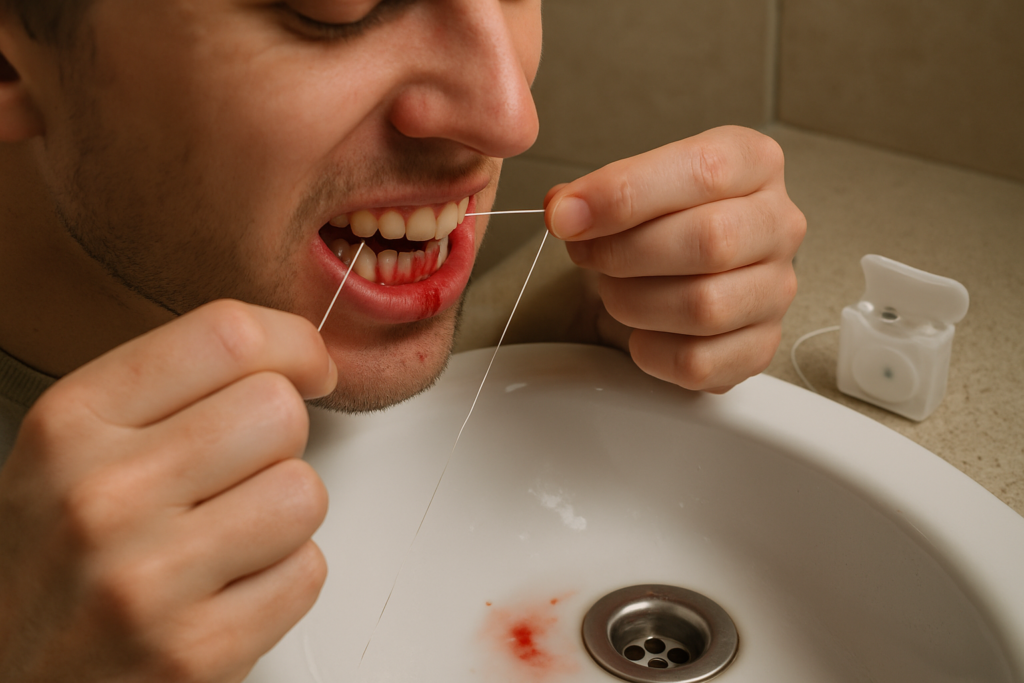
If the bleeding is light and brief, try these steps:
- Continue gentle daily flossing rather than stopping completely
- Brush softly with a soft-bristled toothbrush
- Rinse with warm salt water if the area feels irritated
- Avoid snapping floss harshly into the gums
- Keep the area clean so inflammation can improve
Many people find that mild bleeding decreases over several days as gum health improves. But there are limits to what should be considered normal. If flossing causes frequent bleeding in the same area, if the gums look puffy or receded, or if the bleeding is significant rather than minor, it is time to schedule a dental evaluation.
When to see an emergency dentist for bleeding gums after flossing depends on the severity. If it is only a few drops and it stops quickly, it is usually not urgent. If the bleeding is hard to control, starts unexpectedly without much pressure, or comes with swelling, severe pain, or signs of infection, prompt dental care is more appropriate.
Gum bleeding after dental work
Gum bleeding after dental work can be normal to a point. The gums may be temporarily irritated after a professional cleaning, deep cleaning, crown preparation, fillings near the gumline, impressions, injections, or other treatment. A small amount of pink saliva or mild oozing for a short period can happen.
However, not all post-treatment bleeding should be dismissed. Contact a dental office promptly if:
- Bleeding increases instead of improving
- Pressure does not help slow it down
- You are soaking gauze repeatedly
- The bleeding restarts heavily after first appearing to stop
- You have intense throbbing pain, swelling, fever, or a bad taste
- The treated area looks open, damaged, or traumatized
This matters especially after extractions, gum procedures, or surgical treatment, where aftercare plays a major role in healing. A blood clot may need to stay undisturbed, and actions like forceful rinsing, smoking, spitting, drinking through a straw, or vigorous activity too soon can interfere with healing and lead to more bleeding.
What to do if bleeding starts after a dental procedure
If you were given post-op instructions, follow those first. In general, practical steps may include:
- Place clean gauze over the area and bite down with steady pressure
- Stay upright rather than lying flat
- Avoid rinsing forcefully
- Do not smoke or use a straw
- Avoid hot foods, alcohol, and strenuous activity for the period recommended by your dentist
- Use only medications that your dentist says are appropriate
If bleeding does not respond as expected, call the treating dentist as soon as possible. Ongoing oral bleeding after treatment may require a professional check to make sure healing is progressing normally.
Bleeding after a mouth injury or dental trauma
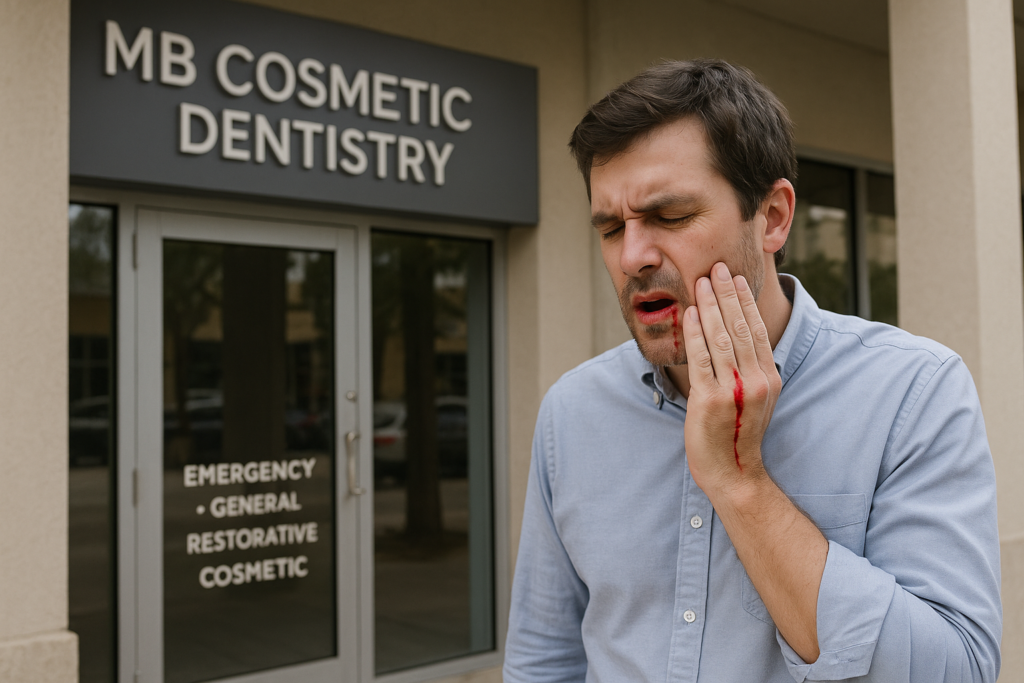
Bleeding gums after a fall, collision, sports injury, or impact to the mouth deserves closer attention than ordinary irritation from brushing or flossing. Trauma can injure the gums, lips, cheeks, bone, or teeth even when the damage is not fully visible right away.
Urgent dental evaluation is often appropriate if a mouth injury involves:
- A chipped, cracked, or broken tooth
- A tooth that is loose or pushed out of position
- A knocked-out tooth
- Deep cuts to the gums or lips
- Persistent bleeding
- Pain when biting
- Swelling of the gums, jaw, or face
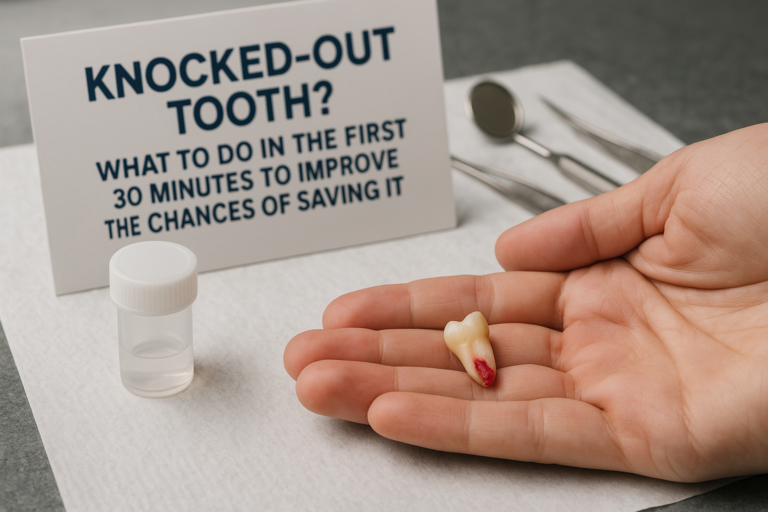
If a tooth is knocked out, time matters. Handle the tooth carefully by the crown rather than the root, and seek immediate dental care. If there is major facial trauma, uncontrolled bleeding, jaw injury, or concern about concussion or head injury, emergency medical services or a hospital may be more appropriate than waiting for a dental office.
Signs that infection may be involved
Gum bleeding can sometimes happen alongside an infection, especially if there is advanced gum disease, an abscess, or a trapped source of bacteria around a tooth. Bleeding alone does not confirm infection, but it becomes more concerning when it appears with other warning signs.
Symptoms that may point to a more urgent problem include:
- Swollen, red, or shiny gums
- Pus or fluid near the gumline
- A bad taste in the mouth or unpleasant odor
- Fever
- Throbbing tooth pain
- Swelling in the face or jaw
- Painful chewing or difficulty opening the mouth
These symptoms should be taken seriously. Dental infections can worsen and spread. An urgent dental visit may be needed to assess the cause and determine whether treatment such as drainage, a root canal, extraction, or another intervention is necessary.
When bleeding gums may require medical emergency care
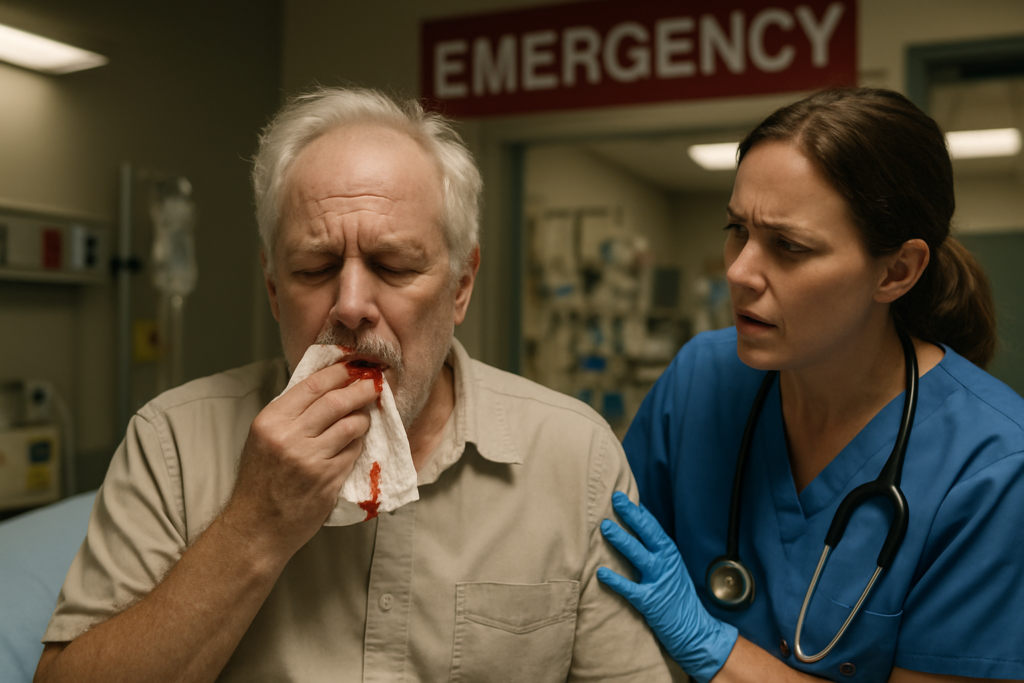
There is an important difference between a dental emergency and a medical emergency. Dentists treat many urgent oral problems, but some situations are potentially life-threatening and should be handled by emergency medical services or a hospital.
Seek immediate emergency medical care if gum or mouth bleeding occurs with:
- Trouble breathing or swallowing
- Rapidly expanding facial or neck swelling
- Severe injury to the face or jaw
- Bleeding that is very heavy and will not stop
- Loss of consciousness, dizziness, or signs of significant blood loss
- Head trauma
Patients taking anticoagulants, those with bleeding disorders, and those with serious underlying medical conditions may also need medical guidance sooner if bleeding is prolonged or difficult to control.
What an urgent dentist may evaluate
When you see a dentist for bleeding gums, the goal is not simply to stop visible bleeding. The underlying cause also needs attention. Depending on the situation, the dentist may evaluate:
- Gum inflammation or periodontal disease
- Trauma to a tooth, restoration, or surrounding tissues
- Bleeding from an extraction site or post-operative area
- A fracture, loose tooth, or bite injury
- An abscess or other infection
- Irritation from a crown, filling, denture, or appliance
- Whether the problem appears dental, medical, or both
Treatment depends on the cause. Some patients may need cleaning or periodontal treatment, while others may need a restoration adjusted, a damaged tooth stabilized, medication reviewed, or a more urgent procedure such as drainage, extraction, or root canal therapy.
Simple first-aid steps before you are seen
If your bleeding is not severe enough for the hospital but still seems urgent, basic first aid may help while you arrange care.
- Apply gentle pressure with clean gauze or a damp tea bag if advised
- Keep your head elevated
- Avoid vigorous rinsing, spitting, or probing the area
- Use a cold compress on the outside of the face if swelling is present
- Eat soft foods and avoid anything sharp, crunchy, very hot, or spicy
- Do not place aspirin directly on the gums
These steps are supportive only. If the bleeding is persistent, heavy, or paired with other concerning symptoms, they should not replace prompt professional evaluation.
Who should be especially cautious about gum bleeding?
Some people should take oral bleeding more seriously because complications may be more likely. These include:
- People taking blood thinners
- Patients with clotting disorders
- Individuals recovering from oral surgery or tooth extraction
- People with extensive gum disease
- Older adults with fragile oral tissues
- Anyone with a weakened immune system
For these patients, even bleeding that begins as a dental issue may deserve earlier communication with a dentist or physician, especially if it does not improve as expected.
How to reduce the chances of future gum bleeding
Not every case is preventable, especially after trauma or surgery, but many episodes of gum bleeding are linked to inflammation and can improve with consistent oral care.
Helpful preventive habits include:
- Brush twice daily with a soft-bristled toothbrush
- Floss gently every day
- Keep up with routine dental exams and cleanings
- Address signs of gum disease early
- Wear a mouthguard during sports when appropriate
- Follow post-treatment instructions carefully after dental procedures
- Let your dentist know about all medications and medical conditions
If you have a pattern of bleeding whenever you brush or floss, do not assume it is normal just because it keeps happening. Ongoing gum bleeding often means your gums need professional attention.
Understanding when urgent care makes sense
Many people hesitate because they are unsure whether their symptoms are “serious enough.” A good rule of thumb is this: if the bleeding is light, brief, and clearly related to minor irritation, it may be appropriate to monitor it while improving your home care. If the bleeding is persistent, significant, related to injury or recent treatment, or accompanied by pain, swelling, infection, or a loose or damaged tooth, urgent dental care is a reasonable next step.
This is especially true when symptoms are getting worse rather than better. Waiting too long can turn a manageable problem into a more complicated one.
Conclusion
Bleeding gums can have many causes, ranging from minor inflammation after flossing to more urgent problems involving trauma, infection, or post-procedure complications. A small amount of temporary bleeding is often not an emergency, but heavy bleeding, ongoing bleeding, swelling, severe pain, signs of infection, or bleeding after injury should not be ignored.
Understanding when to see an emergency dentist for bleeding gums can help you act quickly without panicking. When in doubt, especially after dental work or an oral injury, it is safest to have the situation assessed by a dental professional. And if the bleeding is severe or occurs with trouble breathing, swallowing, major swelling, or serious facial trauma, seek emergency medical care right away.